How to Prepare for US Tax Season as a Freelancer
Table of Contents
Tax season doesn’t have to be a scramble. If you’re a freelancer in the United States, the weeks between January and April 15 are your window to gather documents, organize your expenses, review your deductions, and file your return without the stress that comes from leaving everything to the last minute. The freelancers who pay the least in taxes aren’t the ones who earn less – they’re the ones who prepare early and claim every deduction they’re entitled to.
Disclaimer: This article provides general information only and does not constitute tax advice. Consult a registered tax agent for advice specific to your circumstances.
This guide walks you through a month-by-month timeline for US tax season preparation, from receiving your first 1099 in January through filing day in April.
Your Tax Season Timeline
The key to a smooth tax season is spreading the work across the months leading up to the deadline. Here’s how to think about each phase:
January: Receive and Verify Your 1099s
By January 31, every client who paid you $600 or more during the tax year is required to send you a Form 1099-NEC. If you worked through payment platforms like PayPal, Stripe, or Venmo that processed more than $600 in transactions, you may also receive a Form 1099-K.
Your January tasks:
- Check your mail and email daily. 1099s arrive both electronically and by post.
- Cross-reference against your records. Compare each 1099 against your invoicing records and bank deposits. If amounts don’t match, contact the client for a corrected form.
- Account for income without a 1099. Clients who paid you less than $600 won’t send a 1099, but you still owe taxes on that income. Review your bank statements to capture everything.
- Gather 1099-K forms. If you received payments through platforms that issued a 1099-K, make sure the amounts don’t double-count income already reported on a 1099-NEC.
February and March: Organize Your Expenses
This is where most of the work happens – and where most of the tax savings are found. Your goal is to compile a complete, categorized record of every deductible business expense you incurred during the year.
Start by gathering these documents:
- Receipts for all business purchases – physical receipts, digital receipts from email, and credit card statements
- Quarterly estimated tax payment records – confirmation numbers or canceled checks for each Form 1040-ES payment you made
- Health insurance statements – Form 1095-A (if you bought coverage through the Marketplace) or records of premiums paid
- Home office measurements – square footage of your workspace and total home area
- Vehicle mileage logs – if you drove for business, a record of trips with dates, destinations, and mileage
- Retirement contribution records – statements from any SEP-IRA, SIMPLE IRA, or solo 401(k) accounts
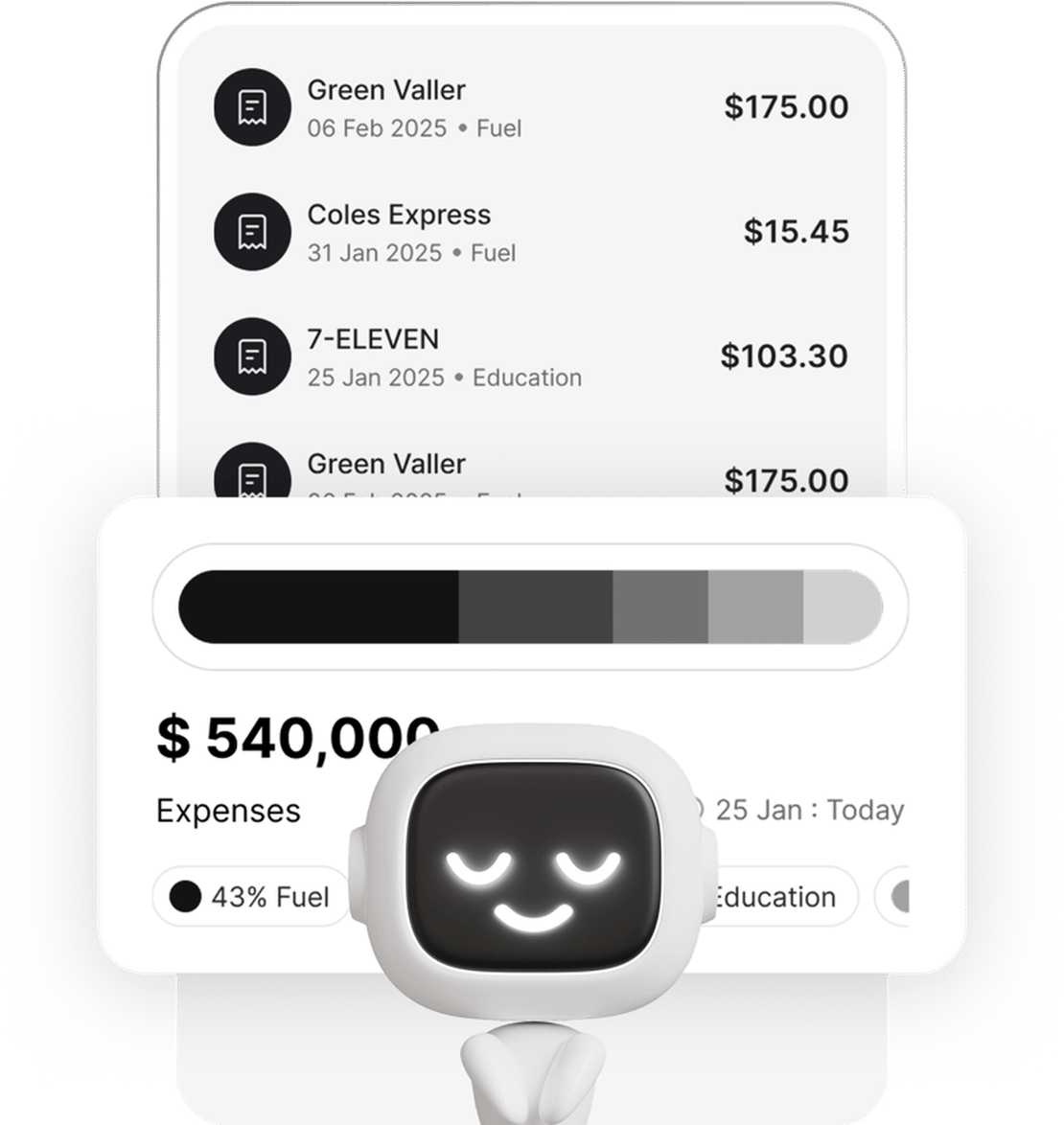
If your receipts are scattered across shoeboxes, camera rolls, and email inboxes, a tool like Taxr can help you digitize and organize your receipts in one place. For a detailed breakdown of deductible expenses, see our guide to 1099 expense tracking.
April 15: Filing Deadline
This is the date your return and any balance due must be submitted to the IRS. If you need more time, you can file Form 4868 for an automatic six-month extension – but that only extends the filing deadline, not the payment deadline. You still need to estimate and pay what you owe by April 15 to avoid interest and penalties.
Organizing Your Schedule C
Every freelancer’s tax return includes Schedule C (Form 1040), which is where you report your business income and expenses. Understanding how Schedule C is structured will help you organize your records more effectively.
Income Section
The income section is straightforward: report your gross receipts (total income from all clients), subtract any returns or refunds, and arrive at your gross income. If you tracked your invoices throughout the year, this section takes minutes.
Expense Categories
Schedule C breaks expenses into specific line items. When you organize your receipts, sort them into these categories:
- Advertising and marketing – website hosting, social media ads, business cards, portfolio site costs
- Car and truck expenses – either the IRS standard mileage rate or actual expenses (gas, maintenance, insurance, depreciation)
- Contract labor – payments to subcontractors or virtual assistants (remember, if you paid anyone $600+, you need to issue them a 1099-NEC too)
- Insurance – business liability insurance, professional indemnity, errors and omissions coverage
- Office expenses – supplies, postage, printing, software subscriptions
- Rent or lease – coworking space memberships, equipment leases
- Utilities – the business-use portion of your phone and internet
- Other expenses – professional development, memberships, bank fees, and anything that doesn’t fit the standard categories
Sorting your expenses into these categories before you sit down to file – or before you hand them to your accountant – will save significant time.
Review Your Estimated Tax Payments
Before you file, check whether you paid enough in quarterly estimated taxes throughout the year. Freelancers are generally required to pay estimated taxes in four installments (April 15, June 15, September 15, and January 15 of the following year).
Pull up your records and note:
- How much you paid each quarter. Compare this against your actual tax liability once you’ve calculated it.
- Whether you owe an underpayment penalty. If you paid less than 90% of your current year’s tax liability (or 100% of the prior year’s liability, whichever is smaller), you may owe a penalty calculated on Form 2210.
- Whether your income was uneven. If you earned most of your income in one quarter, the annualized income installment method on Form 2210 may reduce or eliminate your underpayment penalty.
If you consistently underpay estimated taxes, adjust your quarterly payments for next year based on what you owe this year.
Common Deductions Checklist
Don’t file without reviewing this list. Freelancers frequently miss deductions simply because they forget to look:
- Home office deduction – simplified method ($5/sq ft, up to 300 sq ft = $1,500 max) or actual expense method
- Self-employment tax deduction – you can deduct the employer-equivalent portion (50%) of your self-employment tax from your adjusted gross income
- Health insurance premiums – 100% deductible for self-employed individuals not eligible for an employer plan
- Retirement contributions – SEP-IRA contributions (up to 25% of net self-employment income) can be made until your filing deadline, including extensions
- Student loan interest – up to $2,500 if your income is below the threshold
- Business meals – 50% of the cost of meals with clients or colleagues where business was discussed
- Professional subscriptions – industry publications, professional association dues, continuing education
- Phone and internet – the business-use percentage of your monthly bills
- Software and tools – design tools, accounting software, project management platforms, cloud storage
- Bank and payment processing fees – PayPal fees, Stripe fees, business bank account fees
Filing Options: Self-File vs. CPA vs. Tax Software
You have three main options for actually filing your return:
Self-file with IRS Free File. If your adjusted gross income is below the threshold, you can use IRS Free File to submit your return for free. Best for simple returns.
Tax software. Platforms like TurboTax Self-Employed, H&R Block, and FreeTaxUSA walk you through Schedule C, SE tax, and common deductions with interview-style questions. Cost typically ranges from $50 to $200.
Hire a CPA or enrolled agent. If your freelance business is complex – multiple income streams, contractor payments, or multi-state filing – a tax professional can often save you more than their fee. Expect $300 to $1,000+ depending on complexity.
When to File an Extension
Filing an extension with Form 4868 is not a sign of failure – it’s a legitimate tool. You should consider an extension if:
- You’re still waiting on 1099s or corrected forms from clients
- You haven’t had time to organize your expenses properly and rushing would mean missing deductions
- You’re dealing with a complex tax situation that requires professional help, and your CPA is fully booked before April 15
- You need more time to make a SEP-IRA contribution (contributions can be made up until the extended deadline)
Remember: an extension gives you until October 15 to file, but you must still estimate and pay your tax liability by April 15.
Start Preparing Now
The single best thing you can do for tax season is start now – not in March, not in April. January is the time to gather documents, organize records, and identify gaps while you still have time to fill them.
If you’ve been tracking expenses with Taxr throughout the year, you’re already ahead. Your receipts are scanned, categorized, and ready to export. If you haven’t been tracking, start today – even retroactive organization is easier with the right tools.
For last-minute filers who are reading this closer to the deadline, check out our last-minute US tax filing tips for strategies to file accurately under pressure.