Tax Deductions for Rideshare and Delivery Drivers: A 1099 Guide
Table of Contents
In short: The IRS treats US rideshare and delivery earnings as self-employment income reported on Schedule C. Vehicle expenses, claimed with either the standard mileage method or the actual expense method, are almost always the biggest deduction. Drivers can also deduct the work-use portion of their phone bill, hot bags, and tolls and parking while working, but never fines or traffic tickets.
The app shows you earned $187 today. What it doesn't show is the tank of gas, the wiper blades you'll replace next month from all those extra miles, or the cut the platform already took before the number hit your screen. Rideshare and delivery driving looks like simple hourly work, but for tax purposes you're running a small business, and the IRS treats your Uber, Lyft, DoorDash, or Instacart earnings as self-employment income reported on Schedule C, not wages.
Disclaimer: This article provides general information only and does not constitute tax advice. Consult a tax professional, such as a CPA or enrolled agent, about your circumstances.
That distinction matters because self-employment income comes with a tax bill W-2 workers never see, but it also comes with deductions W-2 workers never get. Every legitimate business expense you track lowers what you owe. Here's what actually counts.
Deductions Rideshare and Delivery Drivers Can Claim
- Vehicle expenses. This is almost always your biggest deduction. You generally choose between the standard mileage method (a per-mile rate covering gas, wear, insurance, and depreciation) and the actual expense method (a percentage of what you actually spent on gas, insurance, repairs, and depreciation). The two methods have different rules and different record-keeping requirements. Our guide to tracking mileage for the current tax year covers how to choose and log correctly. If you're choosing an app to log miles, Taxr vs Everlance compares a receipt scanner with a mileage tracker.
- Phone, mount, and chargers. Your phone is the dispatch center for your entire business. The work-use portion of your phone bill, a car mount, a spare charging cable, and a phone holder replacement after the last one cracked are all fair game.
- Hot bags and delivery gear. Insulated delivery bags, drink carriers, and the coozies DoorDash and Instacart drivers buy to keep food at temperature are ordinary and necessary for the job, so they're fully deductible.
- Car washes and detailing. Keeping your car clean for passengers or presentable for grocery deliveries is a legitimate cost of doing this specific kind of work, but it's a car expense: it counts only under the actual expense method, not on top of the standard mileage rate.
- Tolls and parking incurred while working. Any toll on a trip with a passenger or an order in the car, and any parking fee tied to a pickup or drop-off, is deductible, whether you use the standard mileage rate or the actual expense method. Parking or speeding tickets are not: fines are never deductible, no matter when they happened.
- Roadside assistance and dash cams. The work-use share of a AAA-style membership (under the actual expense method only), plus a dash cam used for driving safety and dispute evidence, both qualify.
- Rideshare insurance endorsement. If you added a rideshare or delivery driving rider to your auto policy, that incremental cost is a business expense under the actual expense method. The standard mileage rate already covers insurance, so the rider isn't deducted on top of it.
- Snacks and water for passengers. If you stock your car with water bottles or mints to improve ratings and tips, that's a legitimate marketing-adjacent expense. Keep it separate from your own snacks and groceries, which are personal and not deductible just because you ate them between trips.
- Platform and service fees. Depending on how your platform reports your gross earnings, booking fees or service charges the platform deducts before paying you out may need to be claimed separately as a business expense rather than assumed to be netted out already. Check your annual tax summary against your bank deposits to see which one your platform shows.
- Depreciation on your vehicle. If you use the actual expense method, the decline in your car's value over time as a business asset is part of your deduction. This is a mechanical calculation with its own rules; a tax professional or the IRS vehicle expense guidance can walk you through it.
What Doesn't Count
A few things trip up drivers every season. Commuting (the drive from your home to wherever your work actually begins) is treated differently than the miles you drive once you're online and working; where exactly that line falls depends on your setup, so this is worth confirming with a tax professional rather than guessing. Ordinary clothing doesn't qualify just because you wear it while driving. There's no "driving uniform" exception. Speeding, parking, and red-light camera tickets are never deductible, even if you were technically working when you got them. And the biggest trap of all: your per-trip earnings are not your profit. The number the app shows you before a trip is gross revenue, not what you keep after gas, tolls, wear, and fees. Treating it as take-home pay is how drivers end up owing more than they expected in April.
Don't Forget Self-Employment Tax and Quarterly Payments
Because no employer is withholding anything from your payouts, your rideshare or delivery income is subject to self-employment tax on top of ordinary income tax. See our explainer on how self-employment tax works for the mechanics. If driving is a significant part of your income, you'll likely need to send the IRS estimated payments during the year rather than paying it all at once in April; our guide to the quarterly estimated tax deadlines breaks down when those are due. Every deduction above reduces both numbers, which is exactly why tracking them matters.
One more thing specific to this work: platforms are only required to send you a tax form (a 1099-K or a 1099-NEC, depending on the platform) once your earnings cross IRS-set thresholds. If you stay under those thresholds, you may not get a form at all, but the income is still taxable and still needs to be reported. Don't wait for paperwork that might not arrive; track what you actually earned and spent.
Keeping Records the IRS Will Accept
Gas station and drive-thru receipts fade within weeks, as anyone who's found a blank strip of paper in a car door pocket knows. The fix is capturing the receipt the moment you get it, not saving a shoebox for February. The IRS accepts digital copies of receipts as valid records, and the general rule of thumb is to keep them for at least three years. For a full rundown of what documentation actually holds up, see our guide to what receipts the IRS expects you to keep.
How Taxr Helps Drivers Stay Ahead of Tax Season
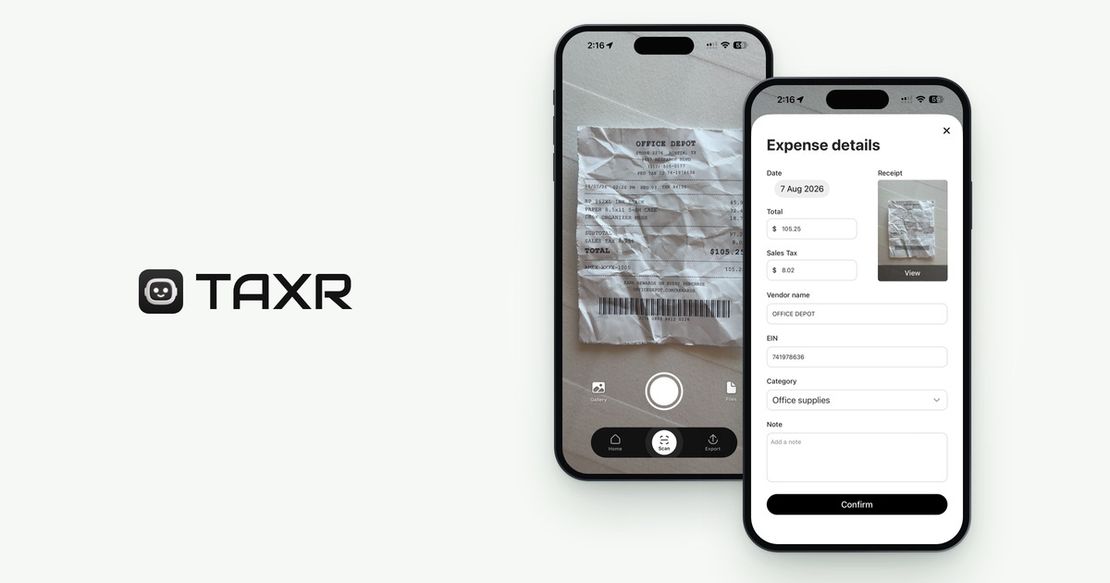
Between fares, the last thing you want to do is dig through a console full of gas receipts. Taxr lets you snap a photo of any receipt (fuel, a car wash, a phone mount from an auto parts store), and the app reads the vendor, date, and amount, then suggests a Schedule C category for you to confirm. You don't need a spreadsheet or any typing between trips.
When it's time to file, export an Excel or PDF report to work from in your tax software or to hand to your tax pro. For more on how automatic receipt scanning compares across apps, see our roundup of the best receipt scanner apps, and if driving is one of several gigs you juggle, our page for gig workers covers the broader picture.
Every receipt you don't capture is a deduction you can't claim, and for drivers those add up fast across a full year of small, frequent expenses. Download Taxr and start capturing them as they happen.