Tax Deductions for Freelance Photographers in Australia
Table of Contents
Freelance photographers in Australia invest heavily in gear, software, travel, and marketing – and most of those costs are tax-deductible. Whether you shoot weddings, commercial work, real estate, portraits, or events, understanding the full range of tax deductions for freelance photographers in Australia can save you thousands of dollars each year. This guide covers every major deduction category so you can keep more of your creative income.
Disclaimer: This article provides general information only and does not constitute tax advice. Consult a registered tax agent for advice specific to your circumstances.
Common Tax Deductions for Freelance Photographers
Photography is an equipment-intensive profession, and the ATO recognises that. Here’s a comprehensive breakdown of what you can claim.
Camera Equipment and Gear
Camera gear is your biggest capital expense, and how you claim it depends on the cost:
- Items costing $300 or less – claim an immediate deduction in the year of purchase
- Items costing more than $300 – depreciate over the item’s effective life, or use the instant asset write-off if you’re eligible as a small business (aggregated turnover under $10 million)
Common equipment deductions include:
- Camera bodies – the ATO’s effective life for photographic equipment is typically 5–10 years depending on the type, but many items fall under the instant asset write-off for small businesses
- Lenses – primes, zooms, specialist lenses (macro, tilt-shift)
- Flash and lighting – speedlights, studio strobes, continuous lights, light modifiers (softboxes, umbrellas, reflectors, diffusers)
- Tripods, monopods, and gimbals – essential support equipment
- Memory cards and card readers – typically under $300 each and immediately deductible
- Camera bags and cases – protective gear for transporting equipment
- Batteries and chargers – replacement batteries for cameras and flash units
- Filters – ND filters, polarisers, UV filters
- Drones – if you use drones for aerial photography (depreciated over effective life; CASA certification costs are also deductible)
Example: You buy a $4,500 camera body with a 5-year effective life and use it 100% for work. Under normal depreciation, you’d claim $900 per year. With the instant asset write-off (if eligible), you could claim the full $4,500 in the year of purchase.
Software Subscriptions
Post-production software is an essential business cost for photographers:
- Adobe Creative Cloud Photography Plan – Lightroom and Photoshop ($16.99/month or $203.88/year)
- Adobe Creative Cloud All Apps – if you also use Premiere Pro, After Effects, or InDesign ($90.99/month)
- Capture One – an alternative to Lightroom for tethered shooting and colour grading
- DxO PhotoLab or PureRAW – for noise reduction and RAW processing
- Canva Pro – for creating social media posts, marketing materials, and client galleries
- Gallery and proofing platforms – Pixieset, ShootProof, Pic-Time, or SmugMug subscriptions
- CRM and booking software – HoneyBook, Dubsado, Studio Ninja, or 17hats
- Accounting software – Xero, MYOB, QuickBooks, or Rounded
A photographer running Adobe Creative Cloud ($91/month), a gallery platform ($30/month), and CRM software ($40/month) is spending roughly $1,932 per year on software alone – all deductible if used for work.
Computer and Storage
Photographers work with large files and need reliable storage:
- Laptop or desktop – a MacBook Pro, iMac, or high-spec Windows workstation for editing (effective life: 4 years)
- External monitors – colour-calibrated displays for accurate editing. A quality monitor costs $500–$2,000+.
- External hard drives and SSDs – for backing up client shoots. Items $300 or less are immediately deductible.
- NAS (Network Attached Storage) – for centralised file management and backup
- Cloud storage – Google Workspace, Dropbox, Backblaze, or similar services for offsite backup
- Monitor calibration tools – Datacolor SpyderX, X-Rite i1Display for colour accuracy
Props, Styling, and Studio Costs
Depending on your photography niche, you may also claim:
- Props and styling items – backgrounds, backdrops, posing stools, product photography surfaces, fabrics
- Wardrobe and styling accessories – if you provide wardrobe items for portrait or fashion shoots
- Studio rent – if you rent a studio space, the full rent is deductible as a business expense
- Home studio – if you use a dedicated room in your home as a studio, you may be able to claim a portion of rent, electricity, and other costs (discuss the CGT implications with your tax agent if you own your home)
Insurance
Insurance is a significant and often overlooked deduction:
- Equipment insurance – covers theft, damage, or loss of camera gear. Premiums are fully deductible.
- Public liability insurance – essential for events, weddings, and commercial shoots. Typically $300–$600 per year.
- Professional indemnity insurance – protects against claims of negligence
- Income protection insurance – premiums are deductible (but payments received under the policy are assessable income)
Marketing and Website
Marketing costs are fully deductible:
- Website hosting and domain – your portfolio site, including hosting fees, domain registration, and SSL certificates
- Social media advertising – Facebook, Instagram, Google Ads, and Pinterest promoted pins
- Business cards and print materials – cards, flyers, brochures, thank-you cards
- SEO and marketing services – if you pay for search engine optimisation or a marketing consultant
- Portfolio printing – physical portfolio books, sample albums, and prints for display
- Listing fees – wedding directories, photography directories, or marketplace listings
Model and Talent Fees
If you hire models, makeup artists, stylists, or assistants for commercial or portfolio shoots, their fees are deductible business expenses. Keep invoices or payment records for every engagement.
Printing and Albums
If you sell prints, albums, or physical products to clients:
- Print lab costs – professional prints, canvases, and framed prints
- Album production – album design software, album manufacturers (e.g., Queensberry, Finao)
- Packaging and shipping – boxes, mailers, tissue paper, postage
Home Office Deductions
Many photographers edit from home. The ATO allows two methods:
Fixed Rate Method (67 cents per hour)
- Claim 67 cents for every hour you work from home (editing, culling, client communication, admin)
- Covers electricity, internet, phone, stationery, and computer consumables
- Equipment depreciation is claimed separately on top
- Keep a record of hours worked from home
A photographer spending 20 hours per week editing and managing their business from home for 48 weeks would claim $643.20 per year under this method.
Actual Cost Method
- Calculate the actual proportion of household costs for your workspace
- Requires detailed records and a dedicated space
- Can produce a higher deduction if you have a dedicated editing suite or studio
For a deeper look, check out our home office deduction calculator guide.
Vehicle and Travel Expenses
Photographers travel to shoots regularly, and these costs are deductible:
- Travel to shoot locations – weddings, events, commercial shoots, portrait sessions. If you work from home, travel to a shoot location is a work-related journey.
- Interstate and international travel – flights, accommodation, and meals for destination weddings, commercial assignments, or photography workshops. The travel must be primarily for work.
- Scouting trips – travel to scout locations before a shoot is deductible if it relates to a confirmed booking or business activity.
For vehicle expenses, the ATO offers two methods:
- Cents per kilometre – 85 cents per business kilometre, capped at 5,000 km ($4,250 maximum)
- Logbook method – claim the business-use percentage of all vehicle running costs. Requires a 12-week logbook.
A wedding photographer driving to 40 weddings per year (average 50 km round trip), plus engagement shoots, meetings, and venue visits, can easily exceed 5,000 business kilometres. If that’s you, the logbook method will likely produce a much larger deduction.
Equipment and Tools
Beyond camera gear and computers, other equipment deductions include:
- Phone – if you use your personal phone for client calls, scheduling, social media, and on-location communication. Claim the work-related percentage.
- Internet – for uploading galleries, cloud backups, and client communication
- Cleaning and maintenance supplies – sensor cleaning kits, lens cloths, blowers, and equipment maintenance products
- CASA drone certification – if you operate a drone commercially, the certification cost is deductible
Record-Keeping Tips for Freelance Photographers
The ATO requires records to be kept for five years. Photographers deal with a mix of large equipment purchases, recurring subscriptions, and frequent small expenses – all of which need documentation.
- Scan receipts immediately – after buying gear, props, or supplies, scan the receipt on your phone. Don’t wait until you’re back at your desk.
- Keep subscription invoices – most software and hosting providers email invoices. Set up a folder or label to store them.
- Track vehicle use – maintain a logbook for 12 weeks if you claim car expenses using the logbook method.
- Record the business purpose – for equipment, travel, and meal expenses, note why it was a business expense. This is especially important for items that could be seen as personal (e.g., a camera also used for personal photos – record the work-use percentage).
- Keep depreciation schedules – for expensive items like camera bodies and lenses, maintain a record of purchase date, cost, and effective life so you can claim depreciation correctly each year.
For more general tips on maximising deductions, check out our guide on 5 tax deduction tips every freelancer should know.
Track Photographer Deductions with Taxr
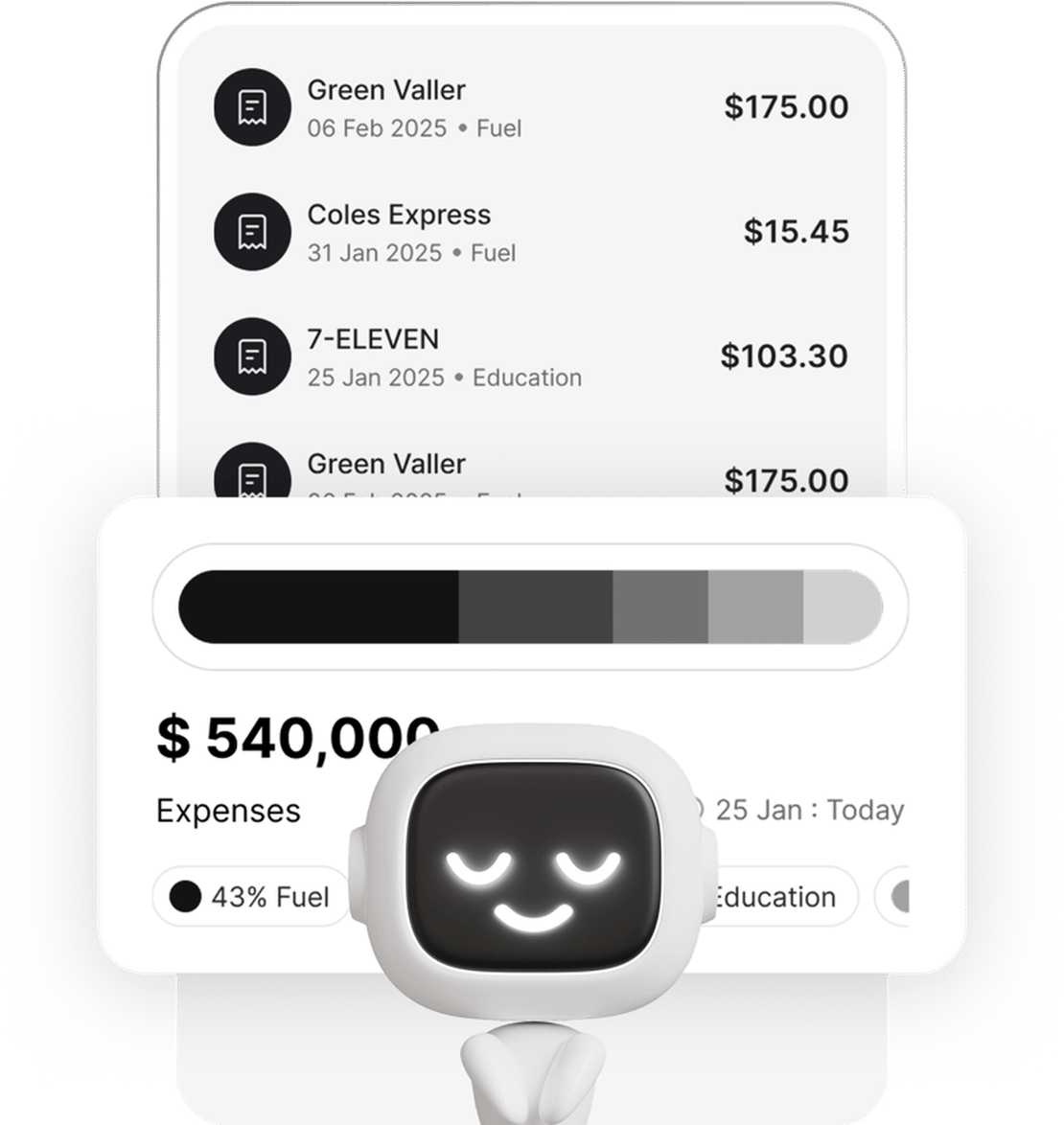
Between camera gear, software subscriptions, travel, marketing, and studio costs, freelance photographers have one of the longest deduction lists of any profession – but only if the records are there. Taxr makes it effortless: scan each receipt with your phone on location or at the register, let the AI extract the details and auto-categorise it, and export a clean summary for your tax agent at EOFY. No lost receipts, no forgotten claims, no end-of-year panic. Download Taxr and keep more of your creative income.