Tax Deductions for Photographers: A 1099 Guide
Table of Contents
In short: US photographers paid on a 1099 can deduct camera bodies, lenses and lighting, editing software such as Lightroom and Photoshop, studio rent, travel to shoots, and equipment and liability insurance. Larger gear purchases may need to be depreciated over time, and gear used only for personal photography doesn't count.
A camera body and a couple of lenses can cost more than most people's cars, and that's before lighting, backdrops, and the second shooter you bring in for a wedding. Then comes the editing marathon: culling and retouching hundreds of images while the next booking is already on the calendar. Photography is gear-intensive, travel-heavy work, and nearly all of that spending flows through Schedule C as deductible business expense.
Disclaimer: This article provides general information only and does not constitute tax advice. Consult a tax professional, such as a CPA or enrolled agent, about your circumstances.
Here's what photographers can typically claim, and where personal and business use start to diverge.
Deductions Photographers Can Claim
- Camera bodies, lenses, and lighting. Your core equipment is deductible, though larger purchases may need to be depreciated over time rather than written off all at once. The specific treatment depends on the purchase and is worth confirming with a tax professional.
- Editing software. Lightroom, Photoshop, and Capture One subscriptions are direct costs of delivering finished work to clients.
- Studio rent. If you rent a dedicated studio space, that rent is a straightforward business expense.
- Props and backdrops. Seamless paper, backdrop stands, styling props, and wardrobe pieces bought specifically for shoots are deductible.
- Second-shooter and assistant labor. Paying another photographer or an assistant for a shoot is a deductible business expense, and if you pay any one contractor enough over the year, you may have your own reporting obligations to them, which is worth checking on before the relationship becomes a habit.
- Travel to shoots. Mileage, flights, and lodging for destination weddings or out-of-town shoots are deductible business travel. Our mileage tracking guide covers how to log local driving between shoots and client meetings.
- Insurance. Both equipment coverage (protecting gear that's expensive to replace) and liability insurance (often required by venues before you can shoot there) are deductible.
- Portfolio and gallery hosting. Squarespace, Pixieset, SmugMug, or similar platforms used to host your portfolio and deliver client galleries are marketing and delivery costs.
- Continuing education. Workshops and conferences like WPPI, or any training that sharpens skills you already use professionally, are deductible.
- Backup and storage. External hard drives and cloud backup subscriptions for client deliverables are a real cost of protecting work you're contractually obligated to deliver.
- Marketing materials. Sample albums, prints used in client consultations, and paid advertising to book new work.
- Client galleries and delivery costs. Print-on-demand album fees you cover, USB drives or packaging for physical deliverables, and file-transfer services for large raw files are all part of getting finished work into a client's hands.
Photography sits at the expensive end of the gear spectrum, which makes the timing of purchases worth planning around. A new camera body or lighting kit bought late in the year can still be claimed on that year's return if it's ready and available for use in your business before the year ends, even if you only used it on one shoot. How much you can deduct that year depends on the item: you may be able to deduct the whole cost with a Section 179 election, or you may have to depreciate it over several years. There's no requirement to "break even" on a piece of equipment before claiming it.
What Doesn't Count
Gear you genuinely use only for personal photography (weekend hikes, family trips with no client work involved) isn't deductible just because it's the same kind of camera you use professionally; only the business-use share of mixed-use equipment qualifies, and that split needs a reasonable basis. The commute from your house to your regular studio isn't a deductible trip. And meals you eat alone while editing at your desk are personal, not business meals. That category is reserved for meals with an actual business purpose, like a client consultation or a vendor meeting, and even then only part of the cost is deductible.
Self-Employment Tax and Quarterly Payments
Photography income reported on Schedule C is subject to self-employment tax on top of regular income tax. See our explainer on how self-employment tax works for the details. Because bookings and payouts are irregular, especially around wedding season, most full-time photographers need to make estimated payments throughout the year rather than settling up once in April; our guide to the quarterly estimated tax dates covers the schedule.
Keeping Records the IRS Will Accept
A backdrop receipt from a slow January and a rental invoice for a lens you needed for one destination wedding both need to be captured before they fade into an unreadable strip of thermal paper. The IRS accepts digital copies of receipts as valid records, and the general guidance is to hold onto them for at least three years. Our guide to what receipts the IRS requires covers what actually counts as adequate documentation.
How Taxr Helps Photographers Stay Organized Between Shoots
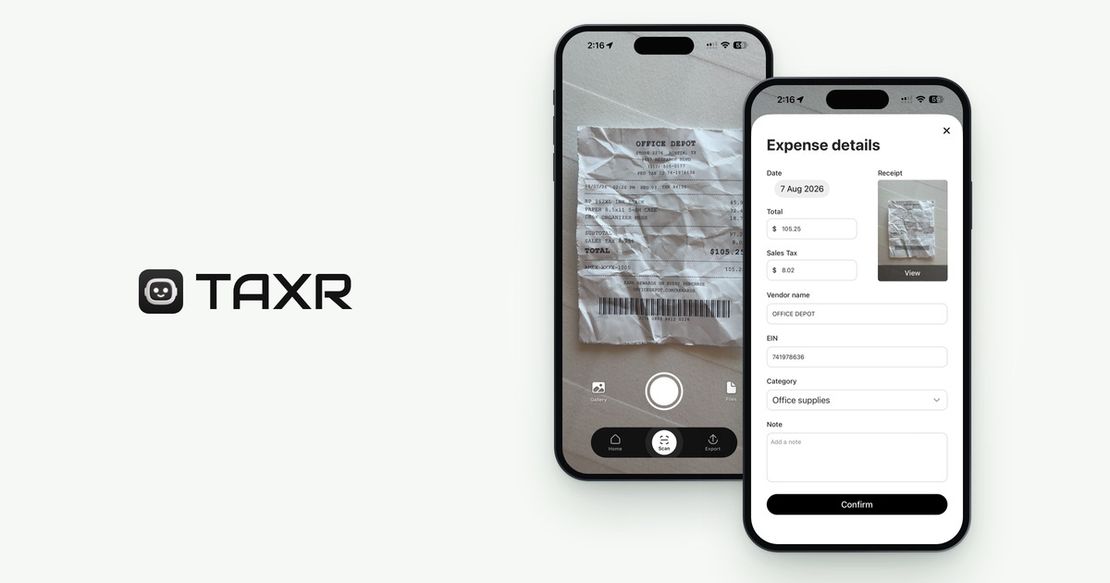
Photography expenses arrive in bursts: a big gear purchase before a busy season, a string of small prop and travel receipts during it, a software renewal that always seems to land during your busiest week. Taxr lets you photograph a receipt the moment you get it, from a camera store invoice to a hotel bill from a destination shoot, and the AI suggests a Schedule C category, which you confirm.
When tax season arrives, export an Excel or PDF report, organized by category, to work from in your tax software or to send to your tax pro. Our comparison of receipt scanner apps covers how automated capture compares, and our page for freelancers covers how Taxr fits creative, project-based work more broadly.
Every prop, rental, and travel receipt you don't capture between shoots is a deduction you're leaving behind. Download Taxr and keep your records shoot-ready all year.