Tax Deductions for Personal Trainers: A 1099 Guide
Table of Contents
In short: US personal trainers working as 1099 contractors can deduct certifications and continuing education, liability insurance, equipment such as resistance bands and kettlebells, gym rent or floor fees, and mileage between client sessions. Ordinary athletic wear, the drive from home to the first session of the day and a personal gym membership generally don't qualify.
One session is on the gym floor at 6am, the next is at a client's house across town at lunch, and the certification you need to renew this year isn't going to pay for itself. Independent personal trainers and coaches (1099 contractors working out of a gym, or trainers building a mobile client roster) carry a specific mix of recurring and one-off expenses that flow straight through Schedule C.
Disclaimer: This article provides general information only and does not constitute tax advice. Consult a tax professional, such as a CPA or enrolled agent, about your circumstances.
Here's what trainers can typically claim, and where the rules get specific.
Deductions Personal Trainers Can Claim
- Certifications and continuing education units. Renewing a NASM, ACE, or ISSA certification, or earning a specialty certification in an area you already coach, is deductible. It's a cost of staying licensed to do the work, not a personal expense.
- Liability insurance. Many gyms require trainers to carry their own liability coverage before they'll let you train clients on the floor, and it's deductible whether or not it's required.
- Equipment. Resistance bands, kettlebells, TRX straps, mats, and any gear that takes a beating from daily client use and needs regular replacing are deductible business supplies.
- Music and coaching app subscriptions. A Spotify Premium plan used to soundtrack sessions, or a programming and coaching platform like Trainerize or TrueCoach used to build and deliver client workouts, are legitimate business tools.
- Gym rent or floor fees. Many gyms charge independent trainers a monthly rental fee or take a percentage cut for access to the floor. That cost is fully deductible.
- Travel between client sessions. Mileage driven from one client session to the next during your working day is generally deductible business travel. The drive from your home to your first session of the day is typically treated as a nondeductible commute, the same as any other job. Our mileage tracking guide covers how to log the difference correctly.
- Marketing. A website, business cards, social media ads, and referral incentives used to book new clients.
- Phone and apps. The business-use portion of your phone plan and any apps used specifically for scheduling and client communication.
- Professional memberships. Dues for organizations like the NSCA or other industry associations relevant to your specialty.
- First aid and CPR recertification. Keeping this current is often a requirement to train clients at all, and the cost is deductible.
- Nutrition and programming software. If you use a separate app or platform to build meal plans or track client progress beyond your core coaching software, that's a deductible business tool too.
Trainers who split time between a gym floor, in-home sessions, and outdoor bootcamps often run three different expense patterns at once: floor fees at the gym, mileage on the road, and a completely separate set of portable equipment for outdoor classes. Each one deserves its own paper trail, because they can each get audited the same way a single business would.
What Doesn't Count
Ordinary athletic wear (leggings, T-shirts, standard sneakers) generally isn't deductible even though you wear it every session, because the IRS treats clothing suitable for everyday use as personal, regardless of how often you actually wear it outside of work. The exception is a genuine branded uniform your gym requires, with a logo that makes it unsuitable for regular wear. That narrower category can qualify. The drive from home to your first client or gym shift of the day is a commute, not deductible business travel, even though the rest of your driving between sessions generally is. And a personal gym membership you use to work out as a client yourself, separate from any facility where you're the one training people, is a personal expense, not a business one, even if it happens to be the same gym where you also work.
Self-Employment Tax and Quarterly Payments
Training income reported on Schedule C is subject to self-employment tax on top of regular income tax. Our guide to how self-employment tax works explains the mechanics. If training is your main source of income, you'll likely need to make estimated payments through the year instead of paying everything at once when you file; see our quarterly estimated tax date guide for the schedule.
Keeping Records the IRS Will Accept
A resistance band receipt from a big equipment refresh and a CEU course invoice from a slow month both need somewhere organized to live, not a gym bag pocket where thermal paper goes to fade. The IRS accepts digital copies of receipts as valid records, and the general guidance is to keep them for at least three years. Our guide to what receipts the IRS requires covers what actually holds up as documentation.
How Taxr Helps Trainers Stay on Top of Their Records
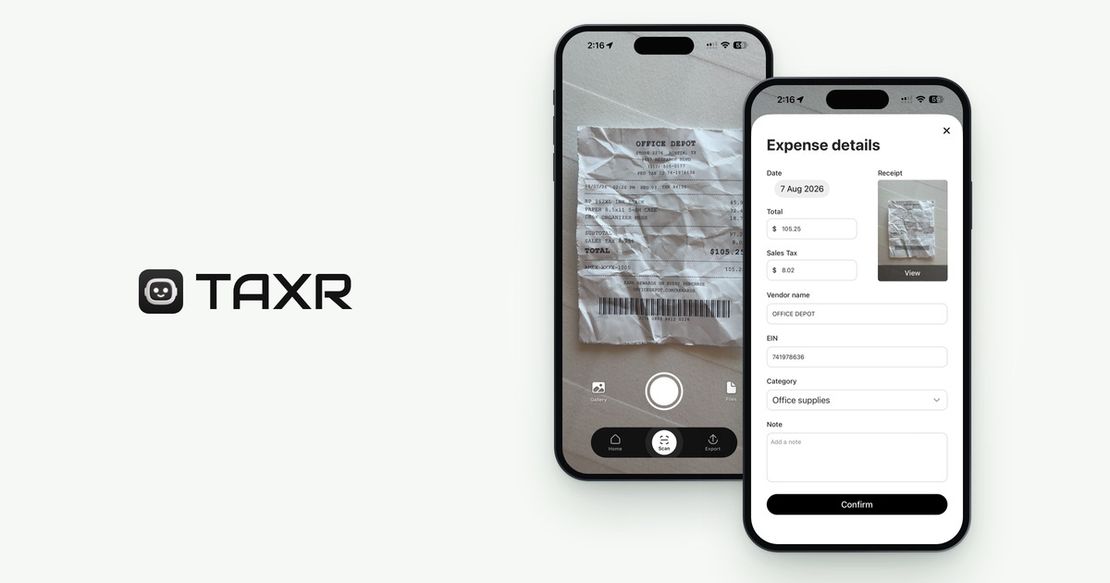
Between back-to-back sessions, tracking a $40 resistance band order or a certification renewal invoice is easy to put off, and easy to forget entirely by tax season. Taxr lets you photograph a receipt for gym-floor equipment the moment you get it, or import a screenshot or PDF of a CEU course confirmation email. The AI reads it and suggests a Schedule C category, which you confirm.
When it's time to file, export an Excel or PDF report to work from in your tax software or to send to your tax pro. Our comparison of receipt scanner apps covers how automated capture compares across tools, and our page for freelancers covers how Taxr fits independent, client-based work more broadly.
Every certification renewal and equipment receipt you don't track is a deduction you're quietly giving up. Download Taxr and keep your records session-ready all year.