Tax Deductions for Nurses and Healthcare Workers in Australia
Table of Contents
Nurses, midwives, doctors, allied health professionals, and other healthcare workers in Australia are often entitled to more tax deductions than they realise. Between uniforms, registration fees, continuing professional development, and travel between workplaces, the costs of working in healthcare add up – and many of them are tax-deductible. This guide covers every major tax deduction for nurses and healthcare workers in Australia so you can keep more of what you earn.
Disclaimer: This article provides general information only and does not constitute tax advice. Consult a registered tax agent for advice specific to your circumstances.
Common Tax Deductions for Nurses and Healthcare Workers
Healthcare workers have a well-defined set of deductions. Here’s what you should be claiming.
Uniforms and Laundry
Uniforms are one of the most common deductions for healthcare workers. You can claim the cost of purchasing, repairing, and laundering work-related clothing that falls into the following categories:
- Compulsory uniforms – scrubs, nursing uniforms, lab coats, and hospital-issued clothing that your employer requires you to wear
- Protective clothing – non-slip shoes, closed-toe shoes required for clinical settings, gloves (if you purchase your own), face masks, and safety eyewear
- Occupation-specific clothing – items that are distinctly associated with your role and not suitable for everyday wear
Laundry costs are also deductible. The ATO allows you to claim:
- $1 per load if the load is entirely work clothing
- $0.50 per load if you mix work and personal items
If your total laundry claim is under $150, you don’t need written evidence – a reasonable estimate is sufficient. Above $150, you’ll need a laundry diary showing the number of loads and costs.
What you can’t claim: Plain clothes, even if your employer has a dress code. A plain white shirt or black trousers is not deductible because it’s conventional clothing.
Professional Registration
Registration with the Australian Health Practitioner Regulation Agency (AHPRA) is mandatory for nurses, doctors, midwives, pharmacists, physiotherapists, and many other health professionals. Your annual AHPRA registration fee is fully tax-deductible. For registered nurses, this fee is currently around $185 per year.
Union and Association Fees
Membership fees for work-related unions and professional associations are deductible:
- Australian Nursing and Midwifery Federation (ANMF) – the largest nursing union in Australia. Annual fees vary by state but are typically $400–$700 per year.
- Health Services Union (HSU) – for allied health and support workers
- Australian Medical Association (AMA) – for doctors
- State-based nursing and midwifery associations – additional memberships relevant to your role
- Specialty college or society fees – for example, the Australian College of Nursing (ACN) or specialty nursing societies
Continuing Professional Development (CPD)
Healthcare workers are required to complete ongoing CPD to maintain their registration. CPD costs are deductible under the ATO’s self-education expense rules, provided the training relates to your current role:
- CPD courses and workshops – both online and in-person
- Conferences and seminars – registration fees for nursing conferences, medical symposiums, and specialty events
- Textbooks and journals – medical textbooks, nursing journals, online subscriptions to clinical resources (e.g., UpToDate, Nursing Times)
- First aid and CPR certification – renewal costs for mandatory certifications
- Postgraduate study – if you’re studying a postgraduate qualification that directly relates to your current role (e.g., a graduate certificate in critical care while working in ICU), course fees, textbooks, and associated costs are deductible
Note: The training must relate to your current income-earning activity. A nurse can’t claim a real estate course, but a wound management workshop or a graduate diploma in midwifery is a natural extension of their skills.
Medical Equipment
If you purchase your own medical equipment for work, you can claim the cost:
- Stethoscope – a quality stethoscope costs $100–$400+. Items $300 or less can be claimed immediately; items over $300 are depreciated.
- Fob watch – a nursing essential. Typically under $50 and immediately deductible.
- Bandage scissors and trauma shears – commonly purchased by nurses and paramedics
- Penlight or torch – for clinical assessments
- Blood pressure cuff – if you purchase your own for work
- Personal protective equipment – if not provided by your employer (masks, gloves, goggles)
Overtime Meal Expenses
If you work overtime and receive an overtime meal allowance under an industrial award or enterprise agreement, you can claim a deduction for the cost of meals you buy during that overtime period. The allowance is assessable income, but the meal cost offsets it. Keep the receipt for every meal purchased during overtime shifts.
Sun Protection
Community nurses, district nurses, paramedics, and other healthcare workers who spend time outdoors as part of their role can claim sun protection expenses:
- Sunscreen – if you apply it for work-related outdoor duties
- Sun-protection hats – wide-brimmed hats worn for outdoor work
- Sunglasses – if used primarily for outdoor work duties (claim the work-related portion)
Home Office Deductions
While most healthcare workers spend the majority of their time in clinical settings, some roles involve administrative work from home – completing patient notes, preparing care plans, or attending telehealth consultations. If you work from home, you can claim home office expenses using the ATO’s fixed rate method (67 cents per hour) or the actual cost method.
A nurse who spends 5 hours per week completing patient documentation at home for 48 weeks would claim $160.80 per year under the fixed rate method. Not a huge amount, but it adds up alongside other deductions.
Vehicle and Travel Expenses
Healthcare workers can claim travel expenses in several situations. The key is understanding which trips are deductible and which are considered a non-deductible commute.
Deductible Travel
- Travel between workplaces – if you work at multiple hospitals, clinics, or care facilities during the same day (e.g., a morning shift at one hospital and an afternoon shift at another), travel between them is fully deductible.
- Travel from one employer to another – if you hold two jobs and travel directly from one to the other, that journey is deductible.
- Home visits – community nurses, district nurses, and allied health workers who travel to patients’ homes can claim travel from their base to each patient’s home and between patient visits.
- Travel to training – if you attend a CPD course, conference, or workshop at a location other than your usual workplace.
Non-Deductible Travel
- Regular commute – travel from home to your usual workplace and back is not deductible, even if you work shifts at unusual hours.
If you use your car for deductible work travel, claim using the cents per kilometre method (85 cents/km, capped at 5,000 km) or the logbook method. Community nurses who drive between patient homes all day should strongly consider the logbook method, as travel kilometres can add up quickly.
Equipment and Tools
Beyond medical equipment, healthcare workers may also claim:
- Laptop or tablet – if used for completing patient notes, accessing clinical systems, or CPD study (claim the work-related portion)
- Phone – if you use your personal phone for work calls, rostering apps, or clinical communication tools. Claim the work-related percentage.
- Internet – if you access clinical systems, complete patient documentation, or attend telehealth sessions from home
Record-Keeping Tips for Nurses and Healthcare Workers
The ATO requires records to be kept for five years. For healthcare workers managing uniforms, CPD, equipment, and travel, here’s how to stay organised:
- Scan uniform and equipment receipts – the moment you buy scrubs, shoes, or a stethoscope, scan the receipt. Thermal paper fades fast.
- Keep CPD certificates and invoices – store proof of course fees, conference registrations, and textbook purchases.
- Track travel between workplaces – if you work across multiple sites, keep a simple log of dates, locations, and kilometres.
- Record laundry loads – if you expect your laundry claim to exceed $150, keep a diary for a representative period.
- Save your AHPRA and union receipts – these are annual expenses that are easy to forget at tax time.
For more general tips on deductions, check out our guide on 5 tax deduction tips every freelancer should know.
Track Healthcare Deductions with Taxr
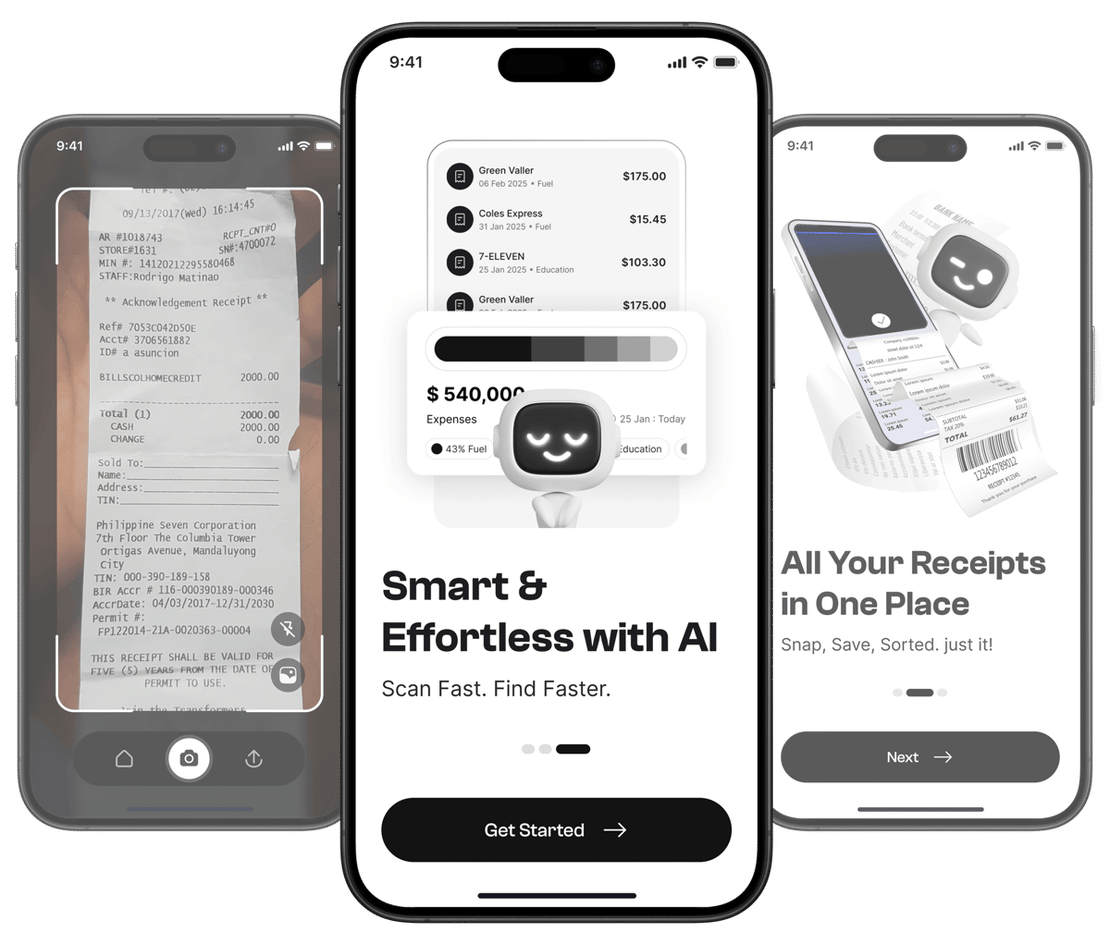
Between uniforms, CPD, registration fees, travel, and equipment, healthcare workers have a solid range of deductions available – but only if the records are there. Taxr makes record-keeping effortless: scan each receipt with your phone after every purchase, let the AI extract the details and auto-categorise it, and export a clean summary for your tax agent at EOFY. No lost receipts, no spreadsheets, no stress. Download Taxr and start claiming everything you’re entitled to.