Tax Deductions for Musicians and Artists: A 1099 Guide
Table of Contents
In short: US musicians and artists paid on a 1099 can deduct instruments and gear, studio time, lessons that improve skills they already use professionally, travel to gigs, rehearsals and sessions, and agent and booking fees. Stage clothing counts only if it isn't suitable for everyday wear, and driving to a regular weekly gig at the same venue is treated as a commute.
A new set of pickups, a repair on the van that hauls your gear to three gigs a week, a few folded bills slipped into your case after a cash gig: none of it shows up on a pay stub, because there isn't one. Between wedding gigs, session work, teaching a few private students, and the occasional art commission on the side, income as a working musician or artist arrives in a dozen different forms and amounts, and almost none of it has taxes withheld. The part many gigging musicians don't fully use: a lot of what you spend to keep working (gear, lessons, studio time, the gas to get to the gig) is deductible against that income.
Disclaimer: This article provides general information only and does not constitute tax advice. Consult a tax professional, such as a CPA or enrolled agent, about your circumstances.
If a venue, client, or booking agency pays you $2,000 or more over the year (for payments made from 2026; the threshold was $600 before that), they're required to send you a Form 1099-NEC, but you owe tax on every dollar of gig and commission income either way, form or no form. Here's what typically counts as a deductible business expense against it, and where the IRS draws a harder line than most musicians expect.
Deductions Musicians and Artists Can Claim
- Instruments and gear. Guitars, keyboards, amps, mixing boards, mics, and other core equipment are deductible business expenses. Bigger-ticket items often aren't a one-year write-off. Depending on the item, it may need to be depreciated over several years, or in some cases expensed upfront under Section 179. Which treatment applies depends on the purchase and your situation, so confirm with a tax professional or irs.gov before you file.
- Studio time. Renting a recording studio, paying an engineer or producer, or booking a rehearsal space for a specific project are deductible costs of creating and delivering your work.
- Samples, plugins, and sound libraries. Software instruments, sample packs, and licensed loops you use to write, record, or produce are direct production costs, the same as physical gear.
- Lessons and coaching. Private lessons, masterclasses, or coaching that maintain or improve skills you already use professionally are deductible. Training for a brand-new career (a guitarist paying for film-editing classes to pivot into videography, say) generally isn't, because that's preparing you for different work rather than sharpening what you already do.
- Stage clothing. This is where the IRS draws a real line: clothing is only deductible if it isn't suitable for ordinary everyday wear. A sequined stage costume or a themed outfit built for a specific act qualifies. Plain black jeans and a band t-shirt you'd also wear to run errands don't, even if you think of it as your "stage look."
- Travel to gigs, rehearsals, and sessions. Driving to a gig, a rehearsal, or a session at someone else's studio is deductible business travel. You can figure the vehicle cost either with the IRS standard mileage rate or by tracking actual vehicle expenses (gas, maintenance, insurance, depreciation). You choose one method per vehicle, and a tax pro can help you decide which fits how much you drive.
- Agent, manager, and booking fees. Commissions paid to a booking agent, manager, or publicist who works on your behalf are deductible business expenses.
- Home studio or practice space. If part of your home is used regularly and exclusively for practicing, writing, recording, or teaching, it can qualify for the home office deduction. The simplified method lets you deduct $5 per square foot of that space, up to 300 square feet (a $1,500 cap). For a full breakdown of both methods, see our home office deduction guide.
- Streaming and distribution fees. Whatever a distribution service takes to get your music onto Spotify, Apple Music, and other platforms, along with any cut a platform takes on direct sales, is a deductible cost of releasing your work.
- Instrument and equipment insurance. Coverage that protects gear that's expensive to replace, especially instruments you haul to gigs and leave in a van overnight, is a deductible business cost.
- Marketing and promo. A website, an electronic press kit, demo recording costs, and promotional photos used to book gigs or pitch your music are deductible costs of getting hired. If you also post covers, tutorials, or behind-the-scenes clips to build an audience on YouTube or TikTok, see our guide to content creator tax deductions for what additionally applies to that side of the work.
What Doesn't Qualify
- Everyday clothes you happen to wear on stage (jeans, a plain t-shirt, sneakers) don't become deductible because you wore them at a gig. They're still ordinary clothing you could just as easily wear to the grocery store.
- Music you buy for your own listening or inspiration, unrelated to a specific paying project, is a personal expense, not a business one, even when it sits in the same genre as the reference tracks you buy for client work.
- Driving to a regular weekly gig at the same venue (a standing Thursday night bar residency, for example) is treated like an ordinary commute, not deductible business travel, the same way a W-2 employee can't deduct the drive to their regular job. The exception is when a home studio is your principal place of business.
- Time spent practicing for your own enjoyment or general skill-building, with no specific paying engagement behind it, isn't a deductible expense on its own, though the strings, reeds, or lesson fees tied to maintaining your professional skill generally still are.
The underlying test is the same for all of it: an expense has to be both ordinary (common for musicians and artists) and necessary (helpful for your work), and where something serves both your art and your personal life, only the business-use share of it is deductible.
Record-Keeping
Keep receipts and records for at least three years. That's the general IRS rule, though it can stretch further if you substantially underreport income. Digital copies are fully accepted: a phone photo of a merch-table receipt or a scanned studio invoice holds up just as well as the paper original, so there's no need to hang onto faded receipts from the bottom of a gig bag.
Gig income adds a few habits worth building on top of basic receipts: log cash tips and door money the night you receive them, since there's no paper trail unless you make one; keep a copy of every venue contract or gig agreement, which doubles as proof of business purpose if a deduction is ever questioned; and keep a simple mileage log for driving between gigs, rehearsals, and sessions, noting the date, destination, and purpose of each trip.
For the fuller picture on what's deductible as a 1099 worker beyond this list, see our 1099 expense tracking guide.
How Taxr Helps Musicians and Artists Stay Organized
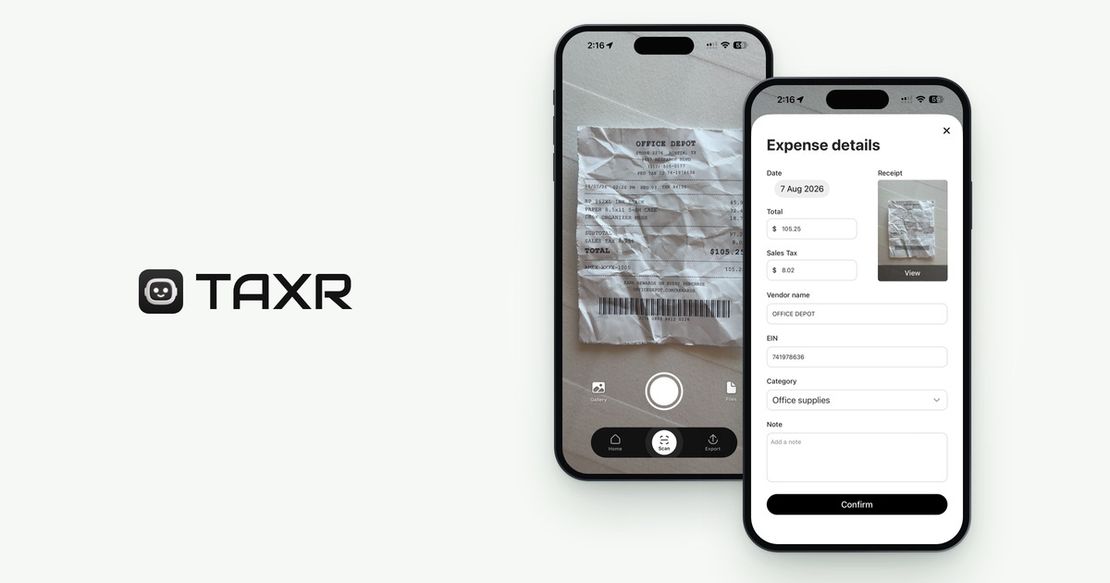
Between gigs, sessions, and a gear closet that never stops growing, receipts pile up fast and rarely land in one place. Taxr lets you scan a receipt with your phone camera the moment you get it (a backline rental invoice, a new set of strings, a gas receipt from the drive to a session), and the AI extracts the vendor, date, amount, and tax details, then suggests a Schedule C category, which you confirm.
Everything is backed up, and when filing season comes around you can export an Excel or PDF report to work from in your tax software or to send to your tax preparer. Taxr doesn't file your taxes, calculate what you owe, or give tax advice. It's a record-keeping tool that keeps the paperwork ready for whoever does. For how it stacks up against other options, see our comparison of receipt scanner apps.
The receipts pile up fast between gigs, sessions, and gear runs. Capturing them as you go is what turns a shoebox of paper into real deductions at filing time.