Tax Deductions for Freelance Designers: A 1099 Guide
Table of Contents
In short: US freelance designers paid on a 1099 can deduct the business-use share of software subscriptions such as Adobe Creative Cloud and Figma, fonts and stock imagery, hardware like laptops and drawing tablets, and a home office used regularly and exclusively for design work. Ordinary clothing, the personal-use share of devices and courses for a completely different career generally don't qualify.
Your Adobe renewal hits the card the same week a client pays a deposit and a font foundry runs a sale you can't resist. Freelance design income doesn't arrive on a schedule, and neither do the expenses that keep your studio running. But every one of those charges, as long as it's ordinary and necessary for your design work, is a legitimate business deduction that lowers what you owe the IRS on income reported through Schedule C.
Disclaimer: This article provides general information only and does not constitute tax advice. Consult a tax professional, such as a CPA or enrolled agent, about your circumstances.
Designers often under-claim because the deductions blend into ordinary life: a subscription here, a stock photo license there. Here's the full picture.
Deductions Freelance Designers Can Claim
- Software subscriptions. Adobe Creative Cloud, Figma, Canva Pro, Webflow, Sketch, Affinity: any tool you pay for to do client work is deductible for the portion used in your business.
- Fonts, assets, and stock imagery. Type foundry licenses, Adobe Stock or Envato credits, icon packs, and mockup templates are all direct costs of producing client deliverables.
- Hardware. Laptops, external monitors, a drawing tablet or stylus, and color-calibration tools are deductible, though larger purchases may need to be depreciated over time rather than written off in a single year; a tax professional can tell you which applies to a specific purchase.
- Home office. If you have a space used regularly and exclusively for design work, a portion of your rent or mortgage, utilities, and related costs is deductible. There are two different methods for calculating this, and they can produce very different numbers. See our breakdown of the simplified versus actual home office methods to figure out which fits your setup.
- Client-meeting travel. Mileage, rideshares, parking, and tolls for pitch meetings, client check-ins, or on-site work are deductible business travel, unlike an ordinary commute to an office you work from every day. Our mileage tracking guide covers how to log trips correctly.
- Portfolio and website costs. Hosting, domain renewals, and portfolio platforms like Format, Adobe Portfolio, or Squarespace are marketing costs for a business that lives or dies on its portfolio.
- Courses and training in your current field. Typography workshops, UX certification courses, and design conferences that sharpen skills you already use professionally are deductible. Courses that would qualify you for a completely different profession generally are not.
- Coworking space. Day passes or monthly memberships at a coworking space are a legitimate alternative to a home office, and the cost is deductible as a business expense.
- Professional memberships. Dues for organizations like AIGA or industry-specific groups relevant to your design practice.
- Business insurance. Professional liability (errors and omissions) coverage that protects you against client disputes over deliverables is a deductible cost of doing business.
- Payment processing fees. Whatever Stripe, PayPal, or your invoicing platform takes off the top of a client payment is a real cost of getting paid, and it's deductible.
What Doesn't Count
The personal-use share of a laptop or tablet you also use for streaming and browsing isn't deductible. Only the business-use portion is, and you should have a reasonable basis for that split. The commute from your bedroom to your kitchen-table workspace isn't a business trip, and neither is a regular drive to a coworking space you treat as your daily office. Ordinary clothing doesn't become deductible because you wore it to a client meeting. And education that trains you for an entirely new career, rather than sharpening the design skills you already sell, generally falls outside what's deductible against your design income.
Self-Employment Tax and Quarterly Payments
Design income reported on Schedule C is subject to self-employment tax in addition to regular income tax. Our guide to how self-employment tax works explains the mechanics. If freelancing is your main income, the IRS generally expects you to pay tax throughout the year rather than in one lump sum at filing time; see our quarterly estimated tax date guide for the schedule. Every deduction you track lowers both bills.
Keeping Records the IRS Will Accept
A stock photo receipt emailed in March and a font license bought at 11pm before a deadline both need to be captured somewhere durable, not left buried in an inbox you'll never search again. The IRS accepts digital copies of receipts as valid documentation, and the general guidance is to hold onto records for at least three years. For a fuller list of what counts as adequate documentation, see our guide to what receipts the IRS actually requires.
How Taxr Helps Designers Stay Organized
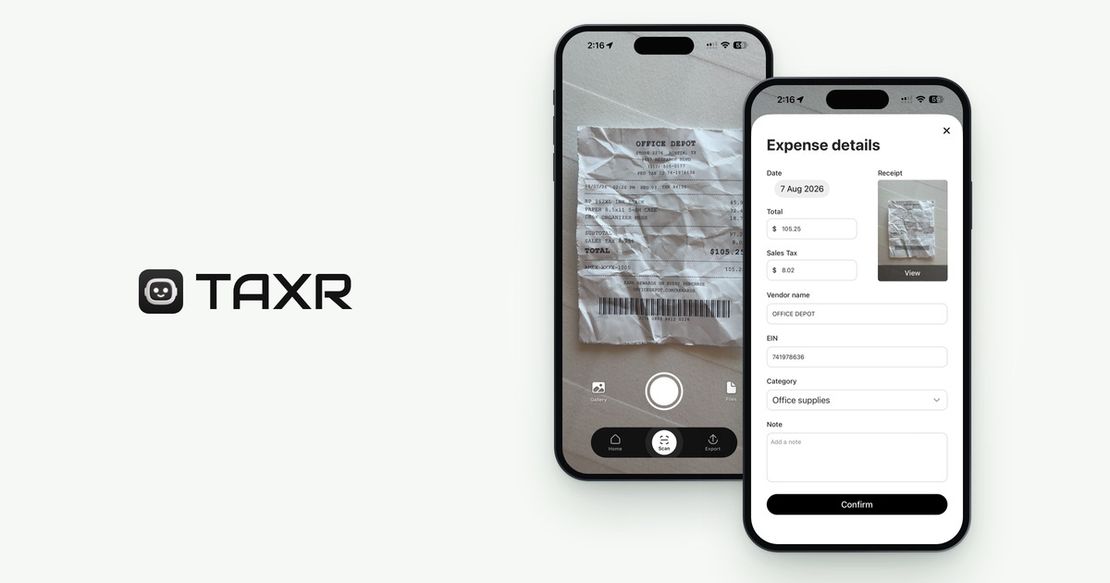
Freelance designers juggle a lot of recurring software charges; a stack of ten or fifteen tools isn't unusual. Snap a receipt, or import a subscription invoice as a PDF or screenshot, and Taxr pulls out the vendor, amount, and date for you, then suggests a Schedule C category, which you confirm. You don't have to remember in April what a $52 charge from a type foundry back in October was for.
At tax time, export an Excel or PDF report, organized by category, to work from in your tax software or to send to your tax pro. For more on how automated receipt capture compares across tools, see our comparison of receipt scanner apps, and for a broader look at how Taxr fits a freelance workflow, visit our page for freelancers.
Every subscription and stock license you don't track is a deduction you're quietly giving up. Download Taxr and capture them as they happen instead of guessing in April.