Tax Deductions for Cleaners and Handymen: A 1099 Guide
Table of Contents
In short: US cleaners and handymen paid on a 1099 can deduct cleaning supplies, tools and equipment, business insurance and bonding, and miles driven between jobs at the IRS rate of 72.5 cents per mile through June 30, 2026 and 76 cents per mile from July 1. The drive from home to the first job of the day usually counts as a commute and isn't deductible.
By eight in the morning the truck is loaded, and by six you'll have moved through four or five different houses: a kitchen deep-clean at one, a leaky faucet and a sticking door at the next, a fence repair for a client three streets over. Somewhere in between you stopped at the hardware store for a new mop head and a tube of caulk, paid for out of your own pocket, and the receipt is still crumpled in the truck's cupholder next to two others you meant to deal with weeks ago. One client paid you in cash before you even got back in the truck. None of that feels like bookkeeping. But if you work as a 1099 independent contractor rather than a W-2 employee of a cleaning or handyman company, almost every one of those small, out-of-pocket costs is a legitimate deduction, and many self-employed cleaners and handymen are quietly leaving money on the table simply because the receipts never make it out of the truck.
Disclaimer: This article provides general information only and does not constitute tax advice. Consult a tax professional, such as a CPA or enrolled agent, about your circumstances.
Here's what actually counts as a deductible business expense once you're running the work yourself, plus a few categories that don't, no matter how work-related they feel.
Deductions Cleaners and Handymen Can Claim
- Cleaning supplies and consumables. Glass cleaner, degreaser, disinfectant, microfiber cloths, mop heads, sponges, and trash bags get used up doing the job rather than kept as equipment, so they're fully deductible in the year you buy them, with no depreciation involved.
- Tools and equipment. A shop vacuum, pressure washer, ladder, drill, and toolbox are all deductible business costs. Bigger-ticket items don't always get written off in the year you buy them, though. Depending on the cost and the specific tool, it may need to be depreciated over several years, or in some cases expensed upfront under a provision like Section 179. Which treatment applies depends on the purchase, so it's worth confirming with a tax professional or irs.gov before you file.
Driving Between Jobs
The drive from home to your first job of the day usually works like an ordinary commute: not deductible, same as anyone else driving to work. (The exceptions are when your home office is your principal place of business, or when the job is outside the metro area where you normally work.) But once you're on the clock, the miles between that first house and the second, third, or fourth job, plus a mid-day supply run, are deductible business mileage.
The IRS sets the rate each year, and in 2026 it even changed mid-year: 72.5 cents per mile for miles driven January 1 to June 30, 2026, and 76 cents per mile for miles driven July 1 to December 31, 2026. That means your log needs to be split by date rather than totaled once at year-end. For the full rate breakdown and how to log trips correctly, see our mileage tracking guide. The alternative is the actual expense method: deducting your real gas, maintenance, insurance, and depreciation costs instead of a flat per-mile rate.
- Uniforms and protective gear. Gloves, coveralls, non-slip work shoes, safety glasses, knee pads, and a respirator for dusty or chemical-heavy jobs are deductible because they're required for the work and not something you'd wear day-to-day. A plain t-shirt and jeans are different: they stay non-deductible even if you happen to clean your own house in them.
- Business insurance and bonding. General liability insurance that covers accidental damage or injury on the job is deductible, and so is the cost of being bonded. Plenty of clients and property managers won't hire a cleaner or handyman who isn't, so it's a real cost of winning the work.
- Licenses and permits. Any license or permit your city, county, or state requires you to hold in order to operate (a general business license, or a contractor's license for certain handyman jobs) is a deductible cost of staying legal.
- Phone. You're scheduling jobs, texting clients your ETA, and taking before-and-after photos from the same phone you use for everything else. The business-use share of your monthly bill is deductible: not the whole bill, just the portion that's actually work.
- Helpers hired as contract labor. Bring in another cleaner or a helper for bigger jobs and what you pay them is a deductible business cost. Pay one helper $2,000 or more over the year (for payments made from 2026; the threshold was $600 before that) and you also have to issue them a 1099-NEC, the same form you receive from your own clients. Keep their records straight so you're ready to hand your accountant everything they need at tax time.
- Advertising and marketing. Flyers for the neighborhood, a simple website, a listing on a local services app, or a small print ad: the cost of getting your name in front of new clients is a deductible business expense.
What Doesn't Qualify
- Your normal commute. The drive from home to your first job of the day is usually the same as anyone else's commute to work, so it's not deductible unless your home office is your principal place of business or the job is outside your usual metro area.
- Plain clothes. A t-shirt and jeans you happen to clean houses in don't become deductible just because you wore them on the job. The test is whether they'd pass for regular clothing anywhere else.
- Personal tools. A drill or ladder bought for a project at your own house, with no client job attached, stays a personal expense.
- Tickets. A parking ticket or speeding ticket picked up while driving between jobs is never deductible, even though it happened while you were working.
Record-Keeping
Hardware store and supply receipts are printed on thin thermal paper that fades within weeks, and between the truck's cupholder, your pocket, and the bottom of a supply bag, they don't have great odds of surviving until tax season anyway. The fix is simple: photograph each receipt the same day you get it. The IRS accepts digital copies: a clear photo or scan holds up the same as the paper original, so there's no need to keep the physical receipt once it's captured. As a general rule, keep records for at least three years, longer if you think your reported income could be questioned.
How Taxr Helps Cleaners and Handymen Stay Organized
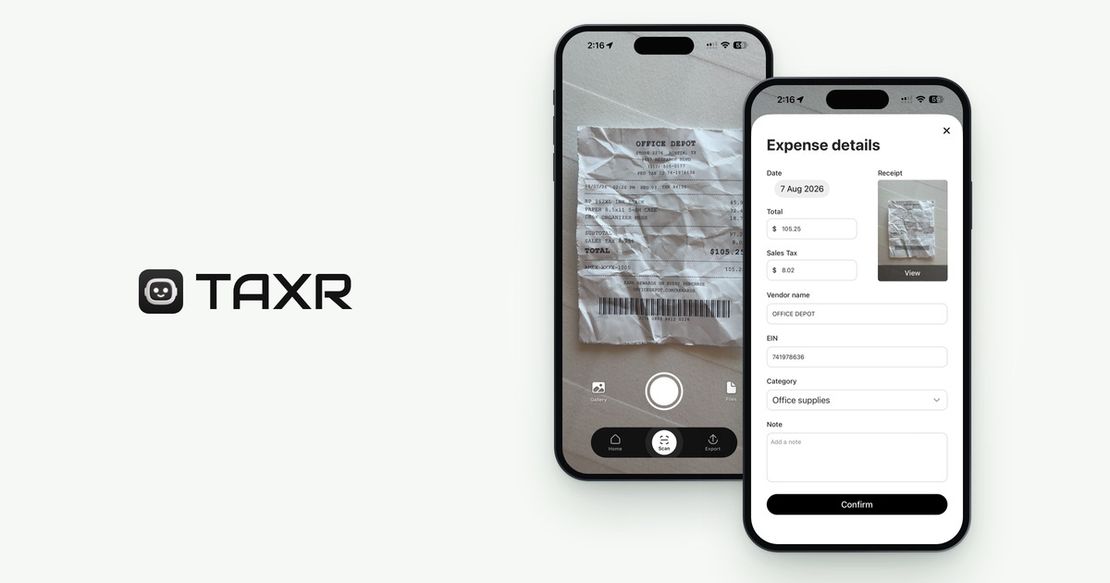
Taxr is built for exactly this kind of day. Point your phone camera at a receipt (in the truck, at the register, or on a client's kitchen counter) and the AI pulls out the vendor, date, amount, and tax details in seconds, then suggests a Schedule C category, which you confirm. Every receipt is backed up in the cloud, so a faded thermal receipt or one that goes through the wash in a work pocket doesn't cost you a deduction. At tax time, export an Excel or PDF report, organized by category, to work from in your tax software or to send to your tax preparer. Taxr doesn't file your taxes, calculate what you owe, or give tax advice. It's a record-keeping tool that keeps everything organized until you hand it off.
For the fuller list of what 1099 workers can deduct, see our 1099 expense tracking guide, and for how Taxr stacks up against other options, see our comparison of the best receipt scanner apps.
Between the driving, the supply runs, and the client calls, you don't have spare time to build a spreadsheet, so don't. Capture the receipt and get to the next job.