MTD for Income Tax from April 2028: The £20,000 Threshold
Table of Contents
From 6 April 2028, Making Tax Digital for Income Tax extends to sole traders and landlords with qualifying income over £20,000 in the 2026-27 tax year. It's the third and, so far, final wave of the rollout HMRC has confirmed. Because £20,000 is a relatively low bar for combined self-employment and property income, it brings in a large slice of the UK's smaller sole traders, part-time landlords, and side hustlers. Here's the full phase-in timeline, who the £20,000 threshold catches, and what's actually confirmed about where MTD goes from here.
Disclaimer: This article provides general information only and does not constitute tax advice. Consult a qualified accountant or tax adviser about your circumstances.
The full MTD for Income Tax phase-in timeline
Three thresholds are confirmed so far, each based on a specific tax year's qualifying income and each starting the following April:
| Qualifying income over | Tax year it's measured in | MTD start date |
|---|---|---|
| £50,000 | 2024-25 | 6 April 2026 |
| £30,000 | 2025-26 | 6 April 2027 |
| £20,000 | 2026-27 | 6 April 2028 |
HMRC estimates around 2.9 million sole traders and landlords will be in scope of MTD for Income Tax once this rollout completes in 2028. If you want the detail on the first two waves, see MTD from April 2027: the £30,000 threshold; the pillar guide at Making Tax Digital for the self-employed covers the programme end to end.
Who's affected by the £20,000 threshold
The 2026-27 tax year (the one currently running) is the year that decides this wave. That makes it different from the £30,000 threshold, where the relevant year has already closed: right now, your 2026-27 income is still being earned, which means there's still time to influence how ready you are, even if you can't influence whether you cross the line.
£20,000 in combined qualifying income is a modest figure. It catches, among others:
- A part-time landlord letting out a single property for somewhere around £20,000 to £24,000 a year in rent, even with no other income.
- A sole trader running a small trade (a tradesperson, a consultant, an online seller) with turnover in that range, regardless of how much profit is left after expenses.
- Anyone combining a smaller trade with a smaller rental property, where neither alone would cross £20,000 but the total does. We go through worked examples of exactly this in sole trader and landlord combined income under MTD.
As with the other thresholds, this is based on gross income, not profit. The full mechanics are in how qualifying income is calculated for MTD.
How qualifying income is worked out
In short: HMRC adds your gross self-employment turnover and gross property income together, using the figures from your Self Assessment return for the relevant tax year, before any expenses are deducted. It doesn't matter whether your actual profit is modest: the threshold test looks at turnover and rental income, not what's left afterwards. This is worth checking properly rather than estimating, since profit and qualifying income can be very different numbers.
Where MTD might go next: the direction of travel
It's natural to wonder whether £20,000 is really the floor. Government commentary around the MTD rollout has signalled an intention to keep extending digital record-keeping and quarterly reporting to lower levels of income over time, but as of today, nothing below £20,000 has been confirmed. There's no announced threshold, and no announced date, for a further wave. If your qualifying income sits under £20,000, MTD for Income Tax is voluntary for you, not scheduled.
Treat any reporting about "what's next" as direction of travel rather than commitment, and check gov.uk or ask your accountant if you want the current, confirmed position rather than speculation.
Getting ahead of the 2028 wave
Because the 2026-27 tax year is happening right now, this is genuinely the best time to start building digital records if you think you'll land over £20,000. The UK government's own Longitudinal Small Business Survey found that only 32% of businesses with no employees use any record-keeping software, and 54% still rely on paper records. Those are habits that MTD's quarterly, cumulative reporting doesn't accommodate well. The earlier you're capturing income and expenses digitally, the less rebuilding you'll need to do when your first quarterly update comes due after April 2028.
If you're not sure whether the digital exclusion exemption might apply to your situation instead, see MTD exemptions: who's out of scope. And once you are mandated, missing deadlines carries consequences under HMRC's points-based penalty system, covered in MTD penalty points explained.
Landlords and combined income
If property income is part of your total, it's worth reading MTD for landlords alongside this post. Property income behaves slightly differently from trade income when it comes to jointly-owned properties and multiple lets, but your share of it still counts in full towards your qualifying income total.
Start building digital records before the deadline decides for you
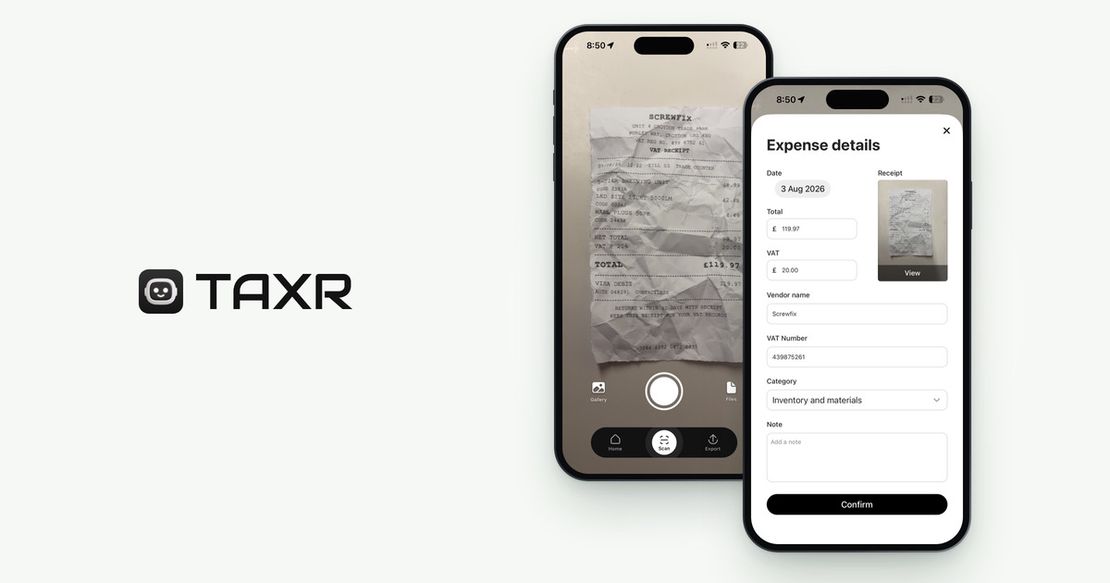
You don't need to wait for a mandate to start scanning receipts properly. Taxr handles the expense records in a setup HMRC's guidance allows, where a record-keeping app works alongside filing software or an accountant, provided the records reach the filing software through a digital link such as a file import: photograph a receipt and Taxr's AI extracts the vendor, date, total and VAT, then suggests a tax-aligned category for you to confirm. When it's time to prepare a quarterly update or hand records to your accountant, export everything as Excel or PDF in a couple of taps.
You can try Taxr free with 10 scans. After that, Taxr Pro is £2.99 a month or £29.99 a year on the App Store, and £2.89 a month or £28.99 a year on Google Play. Taxr runs on iPhone, iPad and Android, and accountants can use the free portal at portal.taxr.io.