Instant Asset Write-Off: What Small Businesses Can Claim in 2026
Table of Contents
With the end of the financial year approaching, now is the time to think about whether you can use the instant asset write-off to reduce your tax bill. This scheme lets eligible Australian small businesses deduct the full cost of an asset immediately – rather than depreciating it over several years. If you’ve been putting off buying that new laptop, piece of equipment, or work vehicle, understanding the instant asset write-off could save you thousands before June 30.
Disclaimer: This article provides general information only and does not constitute tax advice. Consult a registered tax agent for advice specific to your circumstances.
What Is the Instant Asset Write-Off?
Under normal depreciation rules, when a business buys an asset – a computer, a tool, a vehicle – the cost is spread across the asset’s effective life. A $5,000 laptop with a three-year effective life would give you roughly $1,667 in deductions each year.
The instant asset write-off changes that. Instead of claiming the deduction over multiple years, you deduct the entire cost in the financial year the asset is first used or installed ready for use. That $5,000 laptop becomes a $5,000 deduction in year one.
The Australian Government has extended and adjusted this scheme multiple times. For the 2025-26 financial year, the instant asset write-off threshold is $20,000 per asset for eligible small businesses. Any individual asset costing less than $20,000 can be immediately deducted.
Who Is Eligible?
To use the instant asset write-off, your business must meet these criteria:
- Aggregated turnover under $10 million – this includes your turnover plus the turnover of any connected or affiliated entities
- You must be a small business entity – sole traders, partnerships, companies, and trusts all qualify, provided they meet the turnover test
- You must be using the simplified depreciation rules – if you’ve previously opted out of simplified depreciation, you need to opt back in to access the instant write-off
Most freelancers, sole traders, and small business owners comfortably fall within these thresholds. If your annual revenue is under $10 million, you’re almost certainly eligible.
What Can You Claim?
The instant asset write-off applies to new and second-hand assets used for business purposes. Common examples include:
- Computing equipment – laptops, desktops, monitors, tablets, printers
- Tools and machinery – power tools, workshop equipment, specialised trade tools
- Vehicles – cars, utes, and vans (subject to the car cost limit for passenger vehicles – currently $69,674 for the 2025-26 year)
- Office furniture – desks, chairs, shelving, filing cabinets
- Software – off-the-shelf software purchased outright
- Kitchen and hospitality equipment – ovens, fridges, coffee machines for cafes and restaurants
- Camera and audio equipment – for photographers, videographers, and content creators
What you cannot claim
- Assets costing $20,000 or more – these go into the general small business depreciation pool instead (depreciated at 15% in year one, then 30% each subsequent year)
- Capital improvements to buildings – renovations and structural improvements are not depreciable assets under this scheme
- Assets not used for business – or assets only partially used for business, where you can only claim the business-use percentage
- Horticultural plants and in-house software developed in-house – these have separate depreciation rules
The $20,000 Threshold Explained
The threshold is applied per asset, not as an annual total. This means you can write off multiple assets in the same financial year, provided each one individually costs less than $20,000.
If you’re registered for GST, the threshold applies to the GST-exclusive price. If you’re not GST-registered, it applies to the GST-inclusive price.
Worked example
A sole trader electrician (GST-registered) buys the following items before June 30:
| Asset | Cost (ex GST) | Eligible? |
|---|---|---|
| New cordless drill set | $890 | Yes – under $20,000 |
| Diagnostic testing equipment | $4,200 | Yes – under $20,000 |
| Work laptop | $2,100 | Yes – under $20,000 |
| Second-hand work van | $18,500 | Yes – under $20,000 |
| Commercial-grade air compressor | $22,000 | No – over $20,000 |
The electrician can immediately deduct $890 + $4,200 + $2,100 + $18,500 = $25,690 in the current financial year. The $22,000 air compressor goes into the small business depreciation pool instead.
How to Claim It in Your Tax Return
Where you claim the instant asset write-off depends on your business structure:
- Sole traders – claim it in the business section of your individual tax return (the Business and Professional Items schedule). The deduction reduces your taxable income directly.
- Companies, partnerships, and trusts – claim it in the entity’s separate tax return under the depreciation section.
Timing is critical
The asset must be first used or installed ready for use before June 30 of the financial year you want to claim it in. Buying an asset on June 28 is not enough – it needs to be delivered, set up, and genuinely ready to use by June 30. Don’t leave it to the last week unless you’re confident the supplier can deliver in time.
If you’re planning EOFY purchases, our EOFY tax checklist for freelancers covers other deadlines and tasks to complete before June 30.
Record-Keeping Requirements
The ATO requires you to keep records that support your instant asset write-off claim:
- Tax invoice or receipt – showing the supplier, date of purchase, description of the asset, and the amount (including GST if applicable)
- Proof of business use – if the asset is used partly for personal purposes, you can only claim the business-use percentage. Keep a log or diary showing how the asset is used.
- Date first used or installed ready for use – this determines which financial year the deduction falls in. Keep delivery receipts, installation records, or a simple dated note in your records.
- Records of disposal – if you later sell, scrap, or stop using the asset for business, there may be tax consequences. Keep records of what happened and when.
You must keep these records for five years from the date you lodge the relevant tax return. Digital copies of receipts are accepted by the ATO.
For a broader look at what you can deduct as a home-based business, see our home office deduction calculator guide. And if you’re new to expense tracking, our guide on how to track business expenses as a sole trader covers the fundamentals.
Track Your Asset Purchases with Taxr
The instant asset write-off is only as good as your records. If you can’t produce a receipt or invoice when the ATO asks, the deduction gets disallowed – and you may face penalties on top.
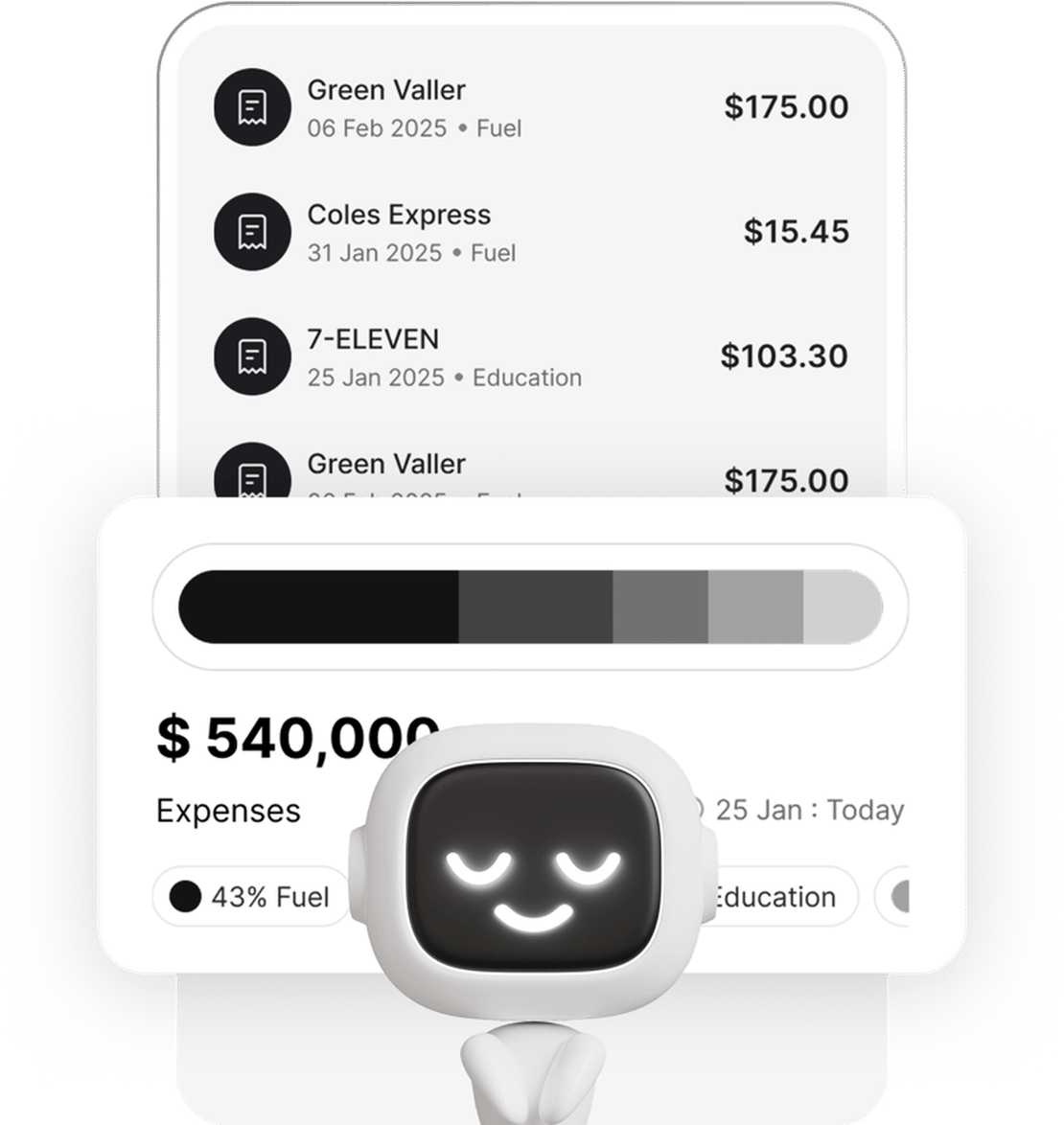
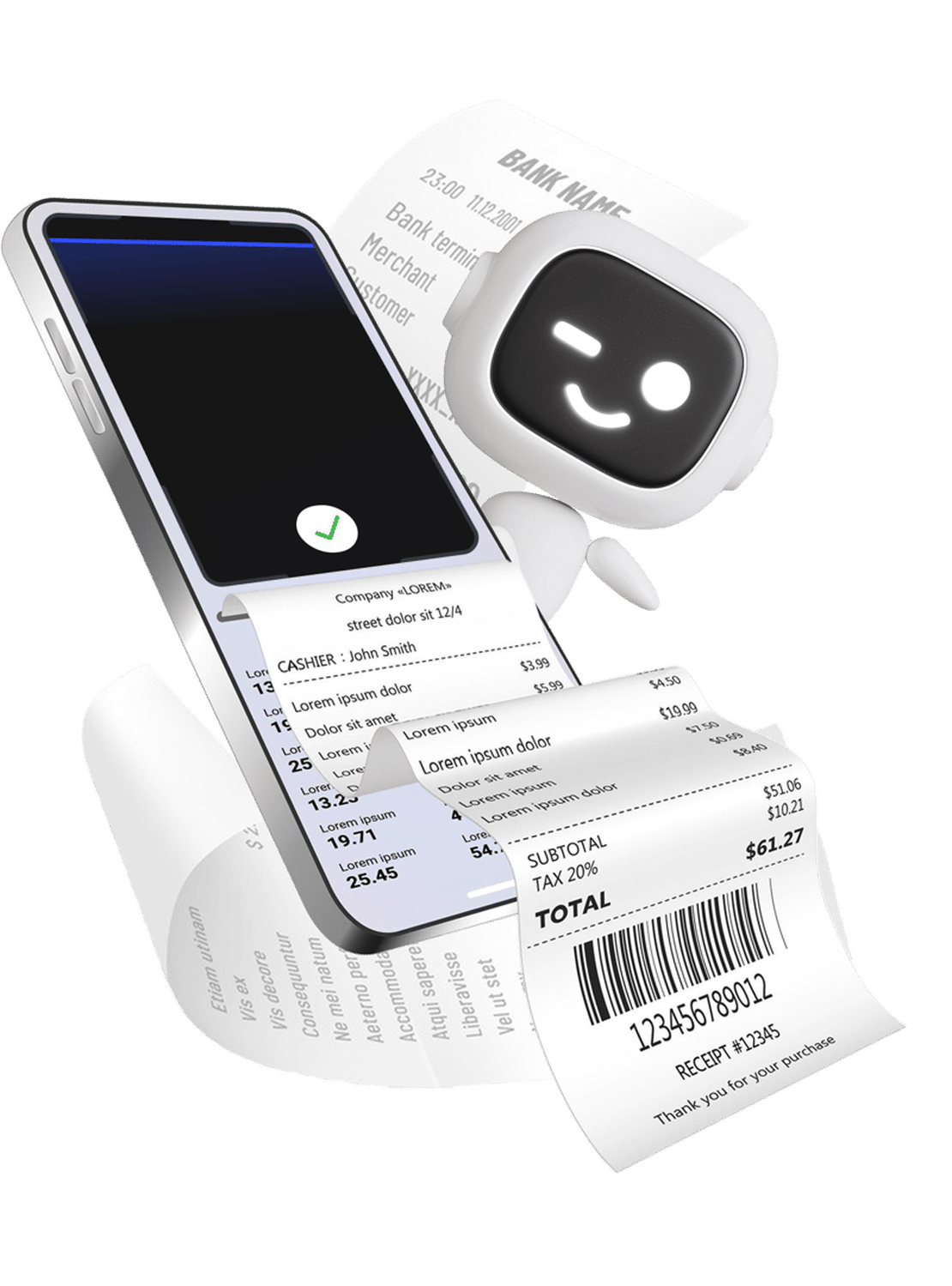
Taxr makes it simple to stay on top of asset purchases. Scan the receipt or invoice the moment you buy a new piece of equipment, and the AI extracts the vendor, date, amount, and GST automatically. When tax time arrives, export a clean summary of all your asset purchases – ready to hand to your accountant or plug into your return.
Don’t let poor record-keeping cost you a legitimate deduction. Download Taxr and start tracking your business asset purchases today.