ABN Expense Tracker: Separating Business and Personal Spending
- Taxr Team
- Expense management
- Updated
Table of Contents
In short: If you earn income under an ABN in Australia, keep business and personal spending apart from day one, using a separate bank account, a dedicated expense tracker or both, and scan receipts immediately. For mixed-use costs such as your phone, car and home office, claim only the business-use portion on a reasonable, consistent basis, and keep records for five years, as the ATO requires.
If you have an ABN and you're earning income as a freelancer or sole trader, you need an ABN expense tracker that keeps your business spending cleanly separated from your personal life. The ATO expects your records to show which spending was for your business, and getting this wrong is one of the fastest ways to trigger an audit. In this guide, we'll walk through why separation matters, what the ATO expects, and the simplest way to stay on top of your deductible expenses throughout the year.
Disclaimer: This article provides general information only and does not constitute tax advice. Consult a registered tax agent for advice specific to your circumstances.
Why You Need to Separate Business and Personal Expenses
Mixing business and personal spending is a common audit trigger for sole traders and freelancers. The ATO's data-matching programs are sophisticated: they compare your claimed deductions against industry benchmarks and flag returns that look unusual. If you can't clearly demonstrate which expenses were for business and which were personal, you risk having deductions disallowed entirely.
Beyond audit risk, keeping your expenses tangled creates real practical problems:
- BAS lodgement becomes a nightmare. If you're GST-registered, you need to report your business purchases accurately every quarter. Sorting through a mixed bank account to find only the business transactions takes hours.
- Tax returns take longer and cost more. Your accountant charges by the hour. Handing them a messy spreadsheet of mixed expenses means they spend more time sorting and less time finding deductions you might have missed.
- You can't claim personal expenses as deductions. This sounds obvious, but when everything is mixed together, it's easy to accidentally claim a personal purchase or, more commonly, to miss a legitimate business expense because it's buried among personal transactions.
- Cash flow visibility suffers. When you can't see your true business expenses at a glance, it's harder to make informed decisions about pricing, spending, and whether you're actually profitable.
The solution is straightforward: track business expenses separately from day one. You can use a separate bank account, a dedicated app or both; the goal is a clean, auditable record of every dollar you spend on your business.
What the ATO Expects from ABN Holders
The ATO has clear requirements for anyone operating with an ABN. As a sole trader or freelancer, you must:
- Keep records of all business income and expenses. This includes invoices you've issued, receipts for purchases, bank statements, and any contracts or agreements. Records must show the date, amount, what the expense was for, and the name of the supplier.
- Lodge a tax return each year. Your business income is reported in your individual tax return using a business schedule.
- Lodge a BAS if you're registered for GST. If your annual turnover is $75,000 or more, GST registration is mandatory. Below that threshold, it's optional but may still be worthwhile.
- Retain records for five years. The clock starts from the date you lodge your tax return (or the due date, whichever is later). That means a receipt from July 2025 could need to be available until late 2031 or beyond.
The ATO's sole trader page outlines these obligations in detail. The key takeaway: the ATO expects you to maintain organised, accessible records, and a shoebox of crumpled receipts doesn't meet that standard.
Setting Up Categories That Match ATO Requirements
One of the most effective things you can do early on is set up expense categories that align with how the ATO expects you to report deductions. This means less rework at tax time and cleaner exports for your accountant. Here are the standard categories most freelancers and sole traders need:
- Office supplies: stationery, printer ink, postage, general office consumables
- Travel: flights, accommodation, meals, and transport for business trips (not daily commuting)
- Vehicle expenses: fuel, registration, insurance, servicing, tolls for business-related driving
- Home office: the work-related portion of rent, electricity, internet, and phone
- Professional development: courses, workshops, conferences, certifications, and industry memberships
- Insurance: professional indemnity, public liability, income protection (if related to your business)
- Communication: mobile phone plan, internet service, business phone line
- Marketing: website hosting, domain registration, advertising, business cards, social media tools
- Software and subscriptions: tools you use for work (design software, project management, accounting apps)
- Accounting and legal: fees for your accountant, tax agent, or solicitor
When your categories match the ATO's deduction categories, your tax return practically writes itself. You (or your accountant) can pull a report by category and drop the totals straight into the right fields.
Mixed-Use Expenses: How to Apportion Correctly
Not every expense is purely business or purely personal. Your phone, internet, car, and home are probably used for both. The ATO allows you to claim the business-use portion of these mixed expenses, but you need a reasonable basis for the split, and you need to be consistent.
Here's how to handle the most common mixed-use expenses:
Phone. Review your call and data logs for a representative period (one month is usually sufficient). Count the business calls and personal calls, then calculate the percentage. If 60% of your calls are work-related, you can claim 60% of your phone bill. Keep a record of how you calculated the split.
Internet. Work out the proportion of your internet use that's for business, by time or by data. If your bill doesn't break down your data use, the ATO says you can keep a diary for a representative four-week period and apply that pattern of business use to the whole year.
Car. If you use your car for both personal and business purposes, the logbook method gives you the most accurate claim. Keep a logbook for at least 12 consecutive weeks recording every trip: purpose, start and end odometer readings, and kilometres driven. Your work-use percentage from the logbook period applies to all car expenses for up to five years.
Home office. You have two options. The fixed rate method gives you 70 cents per hour worked from home (the rate for 2024-25 and 2025-26). It's simple, with minimal record-keeping beyond tracking your hours. The actual cost method lets you claim the real proportion of expenses (electricity, rent, insurance) based on the floor area of your dedicated workspace relative to your home, but requires more detailed records. To compare the two methods with your own figures, try our home office deduction calculator.
The golden rule with apportionment: be reasonable and be consistent. Don't claim 90% business use on your phone if you're a freelance graphic designer who mostly communicates via email. And once you've established a method, stick with it unless your circumstances genuinely change.
The Easiest Way to Track ABN Expenses
The best ABN expense tracker is one you'll actually use every day. Here's a simple workflow that keeps your records clean with minimal effort:
- Use a dedicated expense tracker that's separate from your personal finances. Don't rely on scanning your bank statements at tax time; capture expenses as they happen.
- Scan receipts immediately. The moment you make a business purchase, scan the receipt. Paper receipts fade, get lost, and pile up. A quick scan takes seconds and creates a permanent digital record.
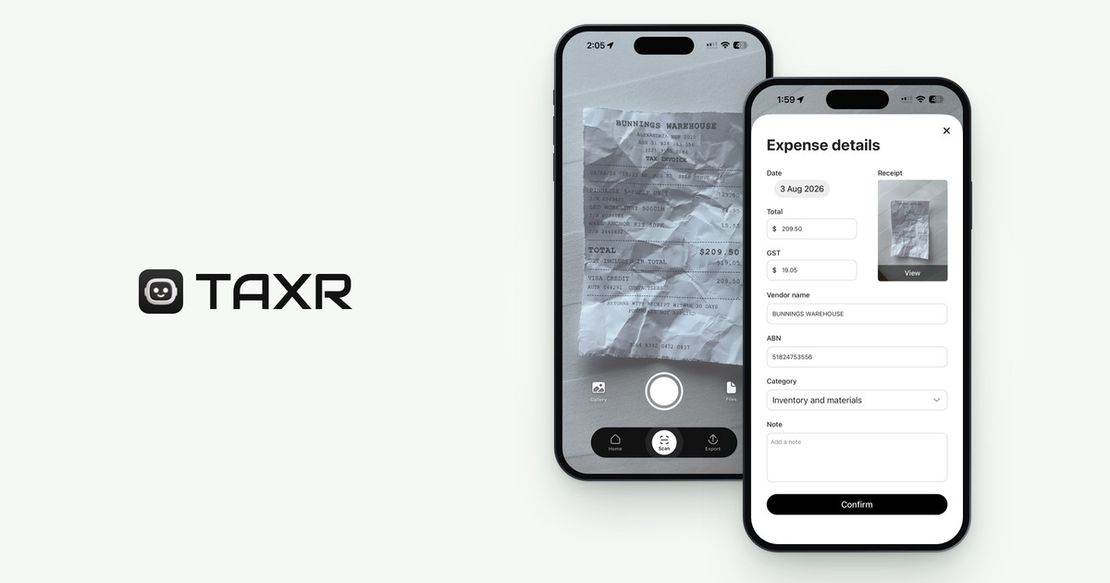
- Let AI categorise your expenses. Modern receipt scanners can read the vendor name, date, amount, and GST, then suggest the right category. Review and confirm: it's faster than typing everything manually.
- Review monthly. Set aside 15 minutes at the end of each month to review your expenses. Check that categories are correct, flag any missing receipts, and make sure nothing has slipped through the cracks.
- Export for BAS and your tax return. When it's time to lodge, export a clean report by category. Your accountant gets a structured summary instead of a pile of loose receipts, and the GST you paid on purchases is already totalled for your BAS.
If you're already tracking your expenses well, you might find our guide on how to track business expenses as a sole trader useful for refining your system. And if you're GST-registered, our GST receipt tracking guide covers the specific requirements for claiming GST credits.
Start Separating Your Expenses Today
The longer you wait to separate business and personal expenses, the harder it gets. Taxr makes it simple: scan your receipts with AI, get a suggested category from Taxr's ATO-aligned set for each one (you confirm it), and export clean Excel or PDF reports when BAS or tax time rolls around. Your records are stored securely in the cloud, searchable, and kept for as long as your account is active, which covers the five years the ATO requires. Download Taxr and get your ABN expenses under control.