What the 2026 Budget Means for Content Creators
Table of Contents
If you make a living (or supplement one) on YouTube, TikTok, Instagram, Twitch, or any other content platform, here’s what the 12 May 2026 Federal Budget actually changes for your tax bill. Three measures stand out from the budget papers: the permanent instant asset write-off (IAWO), a new flat $1,000 deduction option, and a meaningful lift in ATO compliance funding directed squarely at the sharing and platform economy. Everything else — the $75k GST threshold, working-from-home rates, sole-trader rules — is unchanged. We have a full breakdown of every deduction available to you in our tax deductions guide for content creators.
Disclaimer: This article provides general information only and does not constitute tax advice. Tax law is complex and individual circumstances vary. Consult a registered tax agent before making decisions based on this information.
The Three Changes That Matter Most for Creators
The permanent IAWO is the headline measure for creators who invest in gear. Previously the write-off had to be renewed each Budget, creating uncertainty about whether purchases made late in the financial year would qualify. From 1 July 2026 onwards it is locked in permanently, so you can plan a multi-year equipment refresh without waiting on an annual legislative announcement.
The flat $1,000 deduction sounds appealing but is almost certainly the wrong choice for any creator who is genuinely active. It is a fixed deduction you can claim without keeping receipts for individual expenses. The problem is that most working creators spend well above $1,000 on legitimate deductions — software alone can exceed that figure — and itemising gives a much larger tax benefit. The flat option is most useful for very casual creators with minimal documented expenses.
The ATO compliance crackdown is the change that catches people off guard. The government has allocated $75.7 million in additional ATO funding over four years specifically for personal income tax compliance, with the sharing economy and platform income a named priority. If you have been under-reporting platform income, or simply not lodging, 2026-27 is not the year to continue that approach.
Permanent IAWO — Camera, Lighting, Audio Without Annual Sunset
For small businesses with aggregated annual turnover under $10 million — which covers most sole-trader creators — items costing less than $20,000 can be written off in full in the year of purchase. From 1 July 2026 this is permanent, with no scheduled expiry date.
What falls under the $20k threshold for most creators?
- Camera bodies: the vast majority of consumer and prosumer mirrorless and DSLR bodies (Sony A7 series, Fujifilm, Canon R series, Nikon Z series)
- Lenses: individual lenses below $20k each
- Lighting kits: LED panels, softboxes, ring lights, key lights, portable location lights
- Audio: microphones (shotgun, lavalier, USB, dynamic), audio interfaces, mixers, podcast recording kits
- Capture cards and streaming hardware: Elgato, AVerMedia, and similar
- Gimbals and stabilisers
- Drones (consumer and prosumer: DJI Mini 4 Pro, DJI Air 3, and most sub-$20k models)
- Monitors for colour-accurate editing
Items over $20,000 — cinema-grade camera packages, full broadcast studio rigs — fall into the small business general pool and are depreciated rather than immediately written off. The pool depreciation rate for the first year is 15%, dropping to 30% in subsequent years.
The practical implication for planning: you no longer need to rush a purchase before a Budget sunset date. If you have been holding off on a camera body, a new lighting setup, or a microphone upgrade, you can time purchases to when you actually need the gear rather than when the write-off happens to be available. Full details in our related post: Permanent Instant Asset Write-Off — 2026 Budget.
$1,000 Flat Deduction — Almost Always the Losing Choice for Active Creators
The Budget introduces an optional flat $1,000 deduction for individuals, designed to reduce record-keeping burden for people with minimal work-related expenses. You take $1,000 and do not need to substantiate individual items below that threshold.
For content creators, this is almost always the inferior option. Consider a realistic expense list for a creator with a modest setup:
- Adobe Creative Cloud (Photography or All Apps plan): approximately $880–$1,400 per year
- Epidemic Sound or Artlist music licence: $180–$350 per year
- One camera battery replacement ($80) and two memory cards ($120)
- A single lens at $1,200, depreciated over its effective life: a few hundred dollars of deduction per year
That alone puts most active creators well above $1,000 in legitimate deductions — before touching internet, phone, home office costs, or any gear purchases. Itemising with receipts will almost always return more tax benefit. Our detailed breakdown: $1,000 Flat vs Itemise — Which Deduction Is Better?
The flat $1,000 might make sense for a creator in their first few months who has minimal equipment and no software subscriptions yet. For anyone with an established setup, claim the real number.
ATO Platform Income Crackdown
The Sharing Economy Reporting Regime has been progressively expanding the categories of platforms required to report user income directly to the ATO. The 2026-27 Budget adds funding to step up audit and compliance activity in this space.
Here is how income tracing works in practice for creators:
Australian-based platforms (including Australian arms of global platforms) are already subject to the reporting regime and pass income data to the ATO as part of their legal obligations.
Foreign platforms — YouTube (Google Ireland), Twitch (Amazon), TikTok’s creator fund payments — route payments via international bank transfer. Australian banks are required to report international receipts above certain thresholds. The ATO’s data matching capability means even income paid from overseas is increasingly visible.
Brand deals and invoiced sponsorships are reported via your ABN activity, and Australian brands will often submit business expenses (i.e., your payment) to their own tax reporting.
The $75.7 million in new ATO funding is targeted at exactly this: matching platform data, bank data, and declared income to identify gaps. If there is a gap between what platforms are reporting and what appears on your tax return, you will be a candidate for review. Declare all income — AdSense, TikTok Creator Fund, Twitch subscriptions, Ko-fi, Patreon, merchandise sales, everything. More on enforcement: ATO Shadow Economy Enforcement — 2026 Budget.
Brand Deals and Gifted Products
This part of the tax rules has not changed, but it is worth re-stating because it catches a lot of creators out.
When a brand pays you cash for a sponsored post, a YouTube integration, or a product review — that is ordinary assessable income. Declare it.
When a brand sends you a product for free in exchange for content — a camera, a supplement, a gaming chair — the fair market value of that product at the time you receive it is also assessable income. You do not need to receive cash for it to be taxable. The ATO’s position is explicit: if you receive a product or service as payment for content, its value is income.
Practically, this means:
- Keep a log of every gifted item, with the date received and its retail value at that date
- If the product is something you also use personally, the business-use proportion of its value is income and the business-use proportion of its cost is deductible
- Products you received and never used for any purpose other than a review can still be treated as trading stock in some cases — talk to your tax agent about the right treatment
GST When Income Crosses $75,000
The GST registration threshold remains at $75,000 — this did not change in the Budget. But it is worth understanding because creators crossing this line face meaningful administrative obligations.
If your gross income from all creator activities — AdSense, sponsorships, TikTok Creator Fund, Patreon, merchandise, affiliate commissions — exceeds $75,000 in any rolling 12-month period, GST registration is mandatory. Foreign platform income counts toward the threshold even though it arrives from overseas and is generally GST-free. Once you are registered:
- You charge GST on invoices to Australian clients (sponsorships, brand deals)
- You claim GST credits on Australian business expenses (software, equipment from Australian suppliers)
- You lodge Business Activity Statements quarterly or monthly
For freelancers and sole traders crossing the threshold for the first time, our GST registration guide covers the timing and obligations. Also worth reading: our 5 tax deduction tips for freelancers covers the fundamentals that apply whether you are GST-registered or not.
Home Studio Deductions
Nothing changed here in the Budget, but the permanent IAWO makes it a good time to think about studio fit-out as a planned investment rather than an ad hoc spend.
The two methods for claiming home office and studio costs remain:
67 cents per hour (fixed rate method): Covers electricity, internet, phone, and consumables for every hour you work from home. A creator spending 4 hours a day on content — filming, editing, emails, social management — across 250 working days claims $670 per year. Simple, no floor plan needed, but no depreciation of the home itself.
Actual cost method: Calculates the true cost of the floor area you use as a dedicated studio, as a proportion of your home’s total area, applied to mortgage interest or rent, electricity, and internet. Higher deduction potential, but it may trigger a partial capital gains tax liability on the studio area of your main residence when you sell. This is a real trade-off — get advice before using this method. Our home office deduction calculator can help you compare both approaches for your situation.
What Has Not Changed
To be clear about what the Budget left untouched for creators:
- The GST registration threshold stays at $75,000
- The working-from-home fixed rate stays at 67 cents per hour
- The motor vehicle cents per kilometre rate stays at 88 cents (rarely relevant for most creators)
- Standard ABN and sole-trader registration requirements are unchanged
- The hobby versus business distinction at the ATO is unchanged — consistent monetisation with intent to profit puts you in business territory
5-Step Action List for Creators Before 30 June 2026
- Capture every gear receipt under $20,000. Buy now through 30 June 2026, keep the receipt, claim the immediate write-off in your 2025-26 return. From 1 July 2026 the permanent IAWO applies for future years. Use the sole trader tax calculator to model the tax impact.
- Reconcile platform statements against bank deposits monthly. Download your YouTube, Twitch, TikTok, and Patreon payment summaries. Match them to your bank statements. Any discrepancy is a gap the ATO may find before you do.
- Log every gifted product at the time you receive it. Date, brand, item, retail value. A simple notes file works. Your accountant will need this for your return.
- Audit your rolling 12-month gross income against the $75,000 GST threshold. If you are approaching it, register before you cross it — not after. Late registration attracts penalties and can create messy back-GST obligations.
- Book a session with your accountant before EOFY. The Budget changes — especially the choice between flat $1,000 and itemising — are decisions best made with current figures in front of you, not in the final week of June.
For freelancers and creators running their income as a sole trader, these steps are the same regardless of your platform mix.
Frequently Asked Questions
Does permanent IAWO matter for content creators?
Yes — cameras, lighting kits, microphones, capture cards, ring lights, gimbals, drones (under $20,000 each) all qualify for immediate deduction from 1 July 2026 onwards, permanently. You no longer need to time purchases around annual legislative renewals. Budget your gear refresh across multiple years with confidence that the write-off will be available when you buy.
Should I take the flat $1,000 or itemise?
Most active creators will itemise. Adobe Creative Cloud alone runs close to $1,000 per year, and adding camera depreciation, music licences, internet, phone, props, and home studio costs puts the total well above $1,000 for any creator generating meaningful income. The flat option is useful only for very new or very occasional creators with minimal documented expenses.
Does platform income (YouTube AdSense, TikTok Creator Fund, Twitch subs) get reported to the ATO?
Increasingly yes. Platforms based in Australia or operating under reporting agreements pass data directly to the ATO. Foreign platforms like YouTube and Twitch pay via international bank transfer — Australian banks report significant international receipts. With $75.7 million in new ATO compliance funding, data matching is getting more thorough. Declare all income.
Are brand deals taxable?
Yes. Both cash payments and the fair market value of products received in exchange for content are assessable income. A camera sent for review, a supplement gifted for an Instagram post, a gaming peripheral provided for a YouTube unboxing — all assessable at their market value on the day you receive them. Keep records of every gifted item’s value at time of receipt.
Do I need to register for GST?
If your gross income — sponsorships plus ad revenue plus merchandise plus subscriptions plus affiliate income — exceeds $75,000 in any rolling 12-month period, GST registration is mandatory. Foreign platform income still counts toward the threshold even though it arrives from overseas. Once registered, you charge GST on Australian client invoices and claim GST credits on Australian business purchases.
Can I deduct my home studio?
Yes. You can use the WFH fixed-rate (67 cents per hour) to cover electricity, internet, and phone costs for the time you work from home. If you have a dedicated studio room, the actual-cost method lets you claim a proportion of rent or mortgage interest and utilities based on floor area. Be aware: the actual-cost method may trigger a partial capital gains tax liability on the studio area of your main residence when you sell. Get advice before choosing this method.
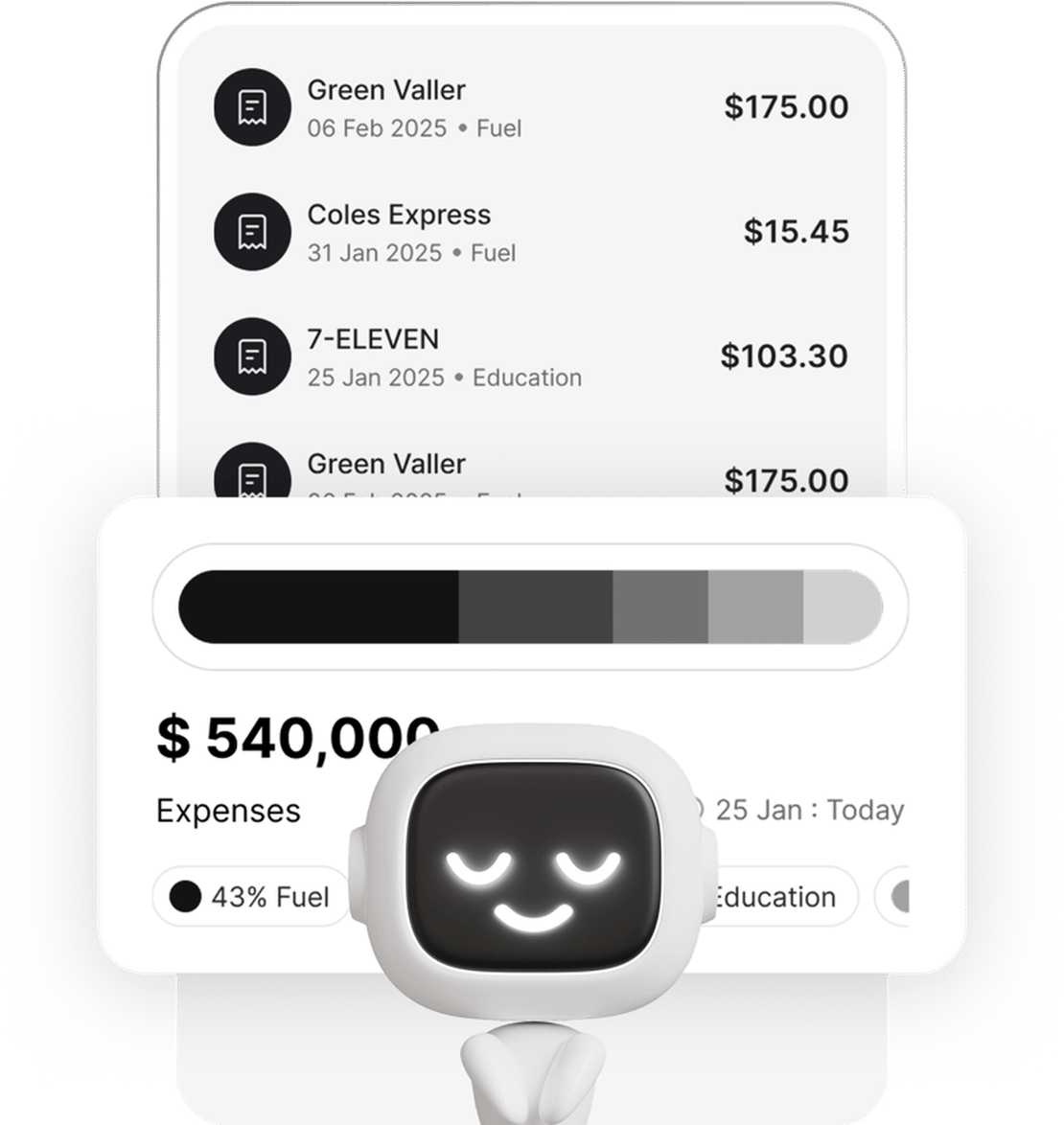
Creators lose more deductions to scattered receipts than to any other reason. A gym membership receipt buried in your email, a camera battery on a card you forgot about, an Adobe renewal on a secondary account — each one is real money left unclaimed. Taxr captures every expense the moment it happens: scan a receipt, import a statement, forward a confirmation email. Everything is categorised, tax-ready, and exportable to your accountant before EOFY. Download Taxr and stop hunting through Stripe emails at lodgement time.