
Taxr Team
We're the team behind Taxr, an AI receipt scanner and expense tracker that makes tax time easier for small business owners, freelancers, and sole traders.
We built Taxr because we saw how much time people waste on manual expense tracking: hunting for faded receipts, typing data into spreadsheets, and scrambling to get everything organised before tax time. Taxr uses AI to handle the tedious parts so you can focus on running your business.
We're a small team based in Australia, so Taxr was built around ABNs, GST, and ATO expense categories from day one. Today it's localized for 195+ countries, with GST, VAT, sales tax and more.
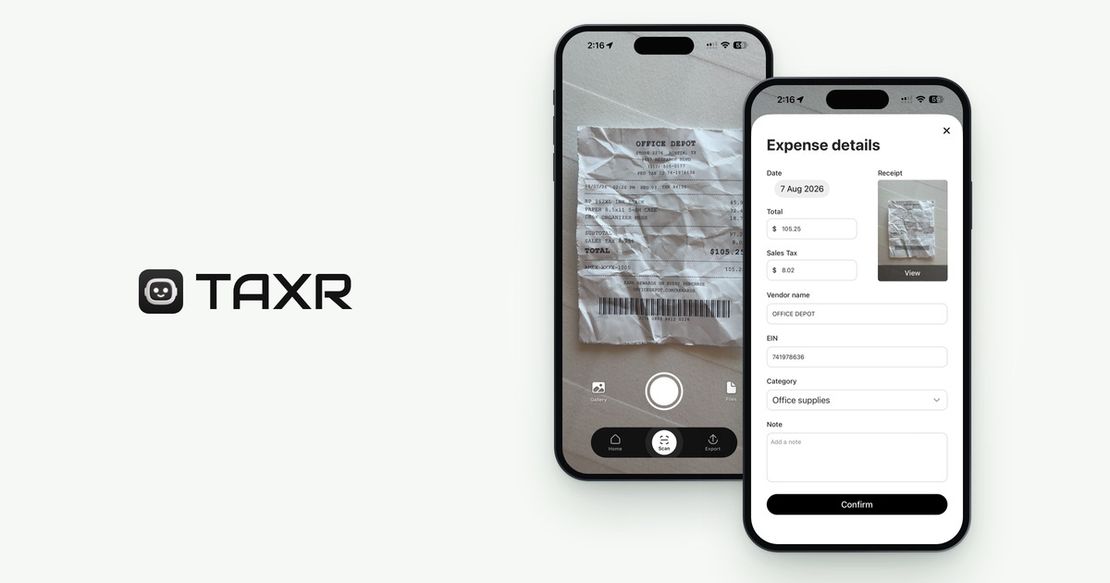
How to Organize Receipts for Taxes: A Simple System for US Freelancers
In short: Put business spending on one card, capture each receipt the day you get it, and sort it into a Schedule C category with the image kept on the record. Review weekly or monthly, then hand over category totals at tax time. The IRS expects each record to show who you paid, how much, when and what for, and generally says to keep records 3 years.
Read MoreKeeper Alternatives for the 2027 Tax Season: 5 Options by Job
The best Keeper alternative depends on which of Keeper's jobs you use. If you want an app that finds deductions and has a professional prepare your return, FlyFin is the closest match. If you'd rather file yourself, FreeTaxUSA charges US$0 for a federal return. If mileage is your biggest deduction, Everlance is built around it. And if what you need is receipts turned into Schedule C records without linking a bank account, that's what Taxr does.
Read More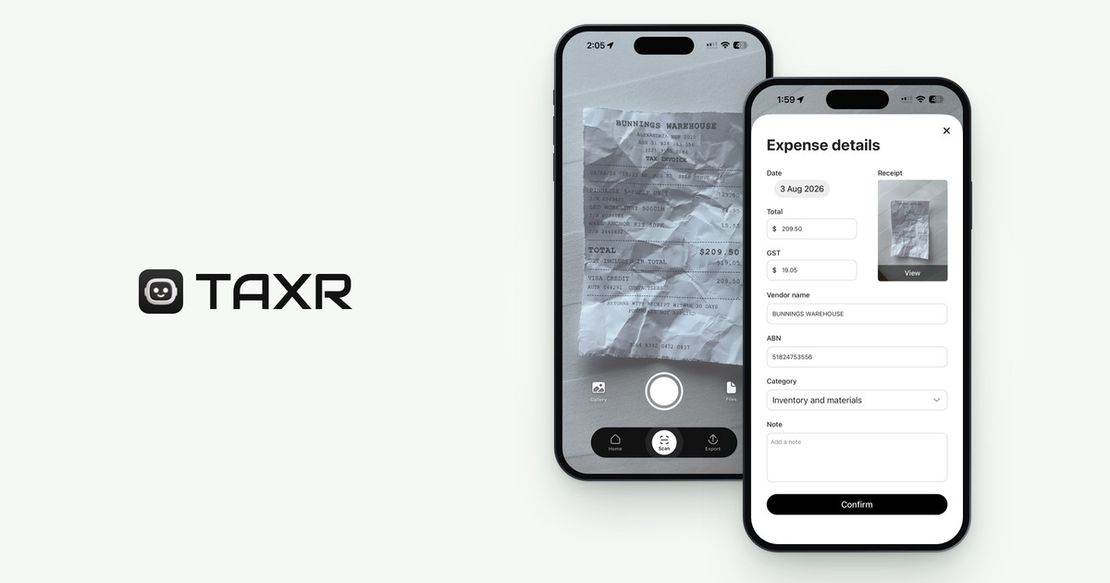
Lost a Receipt? What the ATO Accepts When You Lodge Your Own Tax Return
A lost receipt doesn't always mean a lost deduction. On your 2025-26 tax return you can claim some work-related expenses without receipts, within set limits, and the ATO can accept other evidence in place of a missing receipt, such as a supplier's copy or a bank statement backed by something that shows what you bought. What you can't do is claim an amount you have no way of supporting: if the ATO reviews your return and the evidence isn't there, it can remove the deduction.
Read MoreTaxr vs Everlance: Receipt Scanner or Mileage Tracker?
Taxr vs Everlance comes down to which record you need: Everlance is built for people whose biggest write-off is driving, and Taxr is built for people whose write-offs are on receipts. Everlance's paid plans cost US$89.99 or US$119.99 a year, and its free plan covers 30 automatically tracked trips a month, while Taxr is free to start and Taxr Pro costs US$29.99 a year on the App Store (US$31.99 on Google Play).
Read MoreTaxr vs SimplyWise: Focused Receipt Scanner or All-in-One Suite?
Taxr vs SimplyWise, in short: SimplyWise is a receipt and document organizer that imports receipts from your email and matches them to your bank transactions, sold inside a suite of apps built for contractors, and its site quotes US$29.99 a month or US$239.99 a year. Taxr is a focused receipt scanner that turns paper receipts and PDFs into categorized tax records, localized for 195+ countries, and Taxr Pro costs US$29.99 a year on the App Store (US$31.99 on Google Play). Both are free to start, so the real question is which jobs you need done.
Read MoreHow to Prepare for US Tax Season as a Freelancer
In short: To prepare for the 2027 US tax season as a freelancer, collect and check your 1099s in January (clients who paid you $2,000 or more in 2026 must send a Form 1099-NEC by February 1, 2027), organize your expenses into Schedule C categories in February and March, and file and pay by April 15. Form 4868 extends the filing deadline to October 15, but not the payment deadline.
Read MoreTax Planning for the New Year: Start 2027 with Better Expense Habits
In short: Start 2027 by reviewing which deductions you missed last year, setting up categories that match your tax return, scanning every receipt as soon as you get it, spending 10 minutes a week on your records and setting aside around 30% of every payment for tax. Australian freelancers, whose financial year runs from 1 July to 30 June, should also schedule a mid-year check-in in January.
Read More5 Cash Flow Mistakes Small Businesses Make (and How to Fix Them)
In short: The five cash flow mistakes are mixing business and personal money, spending as if busy months will last, not saving for tax, paying bills late and not tracking expenses. For Australian freelancers and sole traders, the fixes are a separate business account, a buffer of at least three months of essential expenses, 30% of every payment set aside for tax, bills paid on time and real-time tracking.
Read MoreTaxr for Rideshare Drivers: Keep Every Receipt That Cuts Your Tax
Driving for Uber, DiDi or another rideshare platform makes you a sole trader running a business from the driver's seat. The ATO treats you that way, which means every work-related dollar you spend is a dollar you may be able to claim. Most drivers know this and still lose money at tax time, because the evidence is a glovebox full of faded thermal paper and a bank statement that says "FUEL" 180 times without saying which trips were work.
Read MoreTaxr for Tradies: Every Receipt From the Ute to the Tax Return
Tradies spend money all day. A trip to the wholesaler before the first job, consumables at lunch, a replacement blade because the old one gave up on site. Almost all of it is deductible, and a good chunk of it never makes it onto the tax return, because the receipt was a docket that spent three weeks in the centre console.
Read More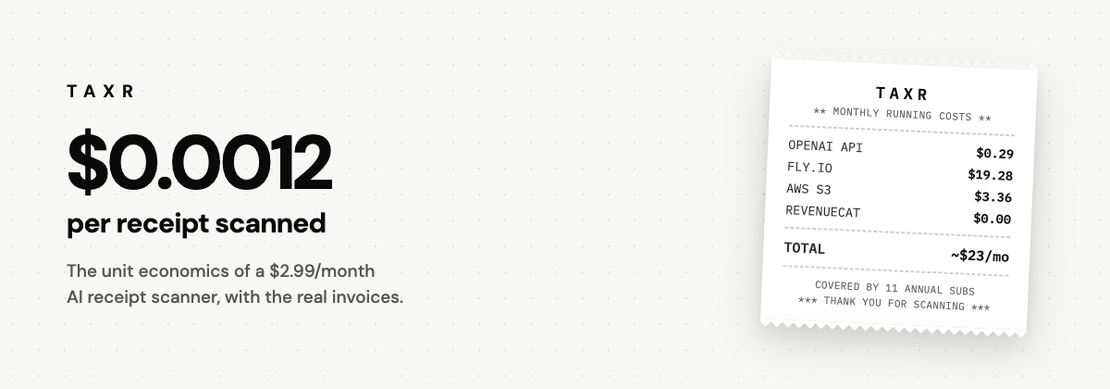
The Unit Economics of a $2.99/Month AI Receipt Scanner
In short: Each Taxr receipt scan costs about $0.0012 in AI inference, a tenth of a cent, and the whole product runs on about $23 a month for inference, hosting and storage. After the 15% store commission, an annual App Store subscriber is worth about $25.49 a year, so eleven annual subscriptions cover the running costs, though development time is the real investment.
Read More1099 Expense Tracking: A Guide for US Freelancers
In short: US freelancers paid on a 1099 deduct business expenses that are ordinary and necessary for their work on Schedule C, which lowers both income tax and self-employment tax. Keep a receipt or written record for every deduction, a mileage log for vehicle costs and your home office measurements for at least six years, and set aside 25-30% of every payment for taxes.
Read More1099 Self-Employment Tax Calculator (2026)
Enter your expected net self-employment profit (income minus expenses) to see your 2026 self-employment tax, the 15.3% that catches many first-year freelancers out. Below the calculator you'll find the quarterly estimated-payment dates and the deductible half that people often forget.
Read More1099-NEC vs. 1099-K: Which Tax Form Will You Actually Get?
In short: For 2026 payments, a client who pays you $2,000 or more for services in the course of their business must send you and the IRS a Form 1099-NEC. A payment platform or marketplace sends a Form 1099-K only for more than $20,000 in gross payments and more than 200 transactions in a year. Most casual sellers won't get one, but the income is still taxable.
Read More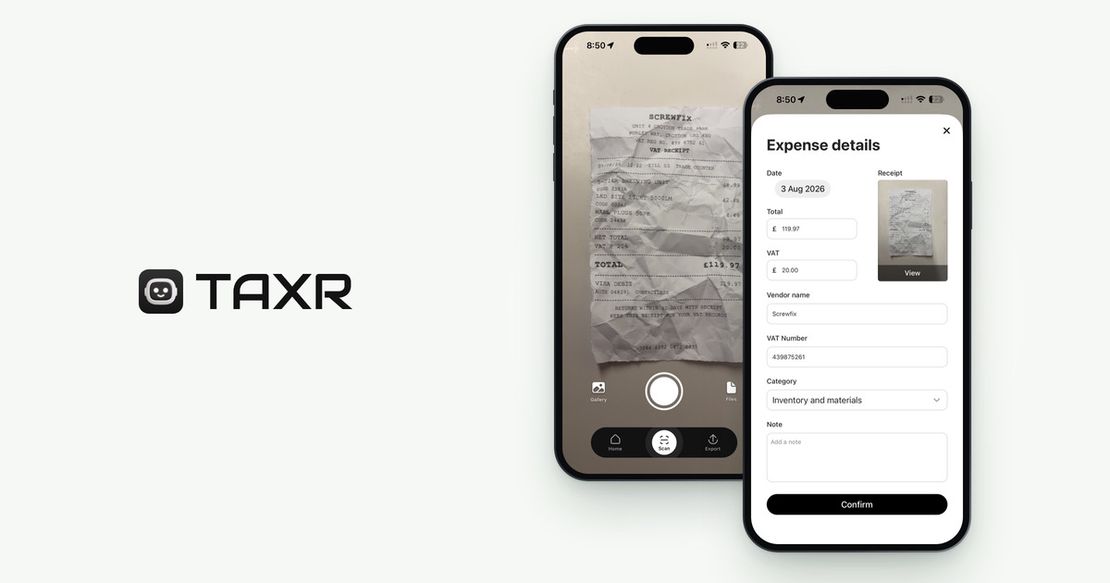
CIS Subcontractor Records and Making Tax Digital: What Tradespeople Need to Know
In short: For HMRC's Making Tax Digital, a CIS subcontractor is a sole trader like any other: gross contracting income, before CIS deductions, counts towards the same thresholds, so over £50,000 in 2024-25 means MTD from 6 April 2026. Once in scope, you keep digital records of materials, tools, van and fuel costs and send HMRC quarterly category totals.
Read MoreDo You Need an Accountant for Making Tax Digital?
In short: You don't have to use an accountant for HMRC's Making Tax Digital: keeping your own digital records and filing through HMRC-recognised software is a legitimate route for one simple income stream and low transaction volume. Consider an accountant if you have self-employment plus property, multiple income sources, high-volume transactions or capital allowances to judge.
Read MoreFirst-Year Freelancer Tax Checklist (2026 to April 2027)
In short: If you went freelance in the US in 2026, work through these steps before your April 2027 filing deadline. Decide on an EIN, open a separate business account and card, capture receipts from day one, set aside part of every payment for quarterly IRS estimated payments, learn your Schedule C categories, pick tax software or a professional, and gather income records and categorized expenses in January.
Read MoreFreelancer Tax Deduction FAQ (2026)
In short: The IRS lets freelancers deduct expenses that are ordinary and necessary for their work. Phone bills and software are deductible for their business-use portion, a meal with a genuine business purpose only partly, and a home office only if the space is used regularly and exclusively for business. Everyday clothing almost never counts, even if you only wear it for work.
Read MoreHome Office Deduction: Simplified vs. Actual Method
In short: Under the IRS simplified method, a US freelancer deducts $5 per square foot of home office, up to 300 square feet, for a maximum of $1,500 per year. The actual expense method deducts the office's percentage of housing costs such as rent or mortgage interest, utilities and insurance, and often produces a bigger deduction. Either way, the space must be used regularly and exclusively for business.
Read MoreIRS Mileage Rate 2026: What It Covers and How to Track It
In short: For 2026 the IRS standard mileage rate is 72.5 cents per mile for business miles driven from January 1 to June 30 and 76 cents per mile from July 1 to December 31. It covers gas, maintenance, repairs, insurance, registration and depreciation, while parking fees and tolls are deductible on top. Log each trip's date, miles driven and business purpose when it happens.
Read MoreMaking Tax Digital Exemptions: Who's Out of Scope for MTD
In short: You're out of scope for HMRC's Making Tax Digital for Income Tax if your qualifying income hasn't crossed £50,000, £30,000 or £20,000 in the relevant tax year, or you have no self-employment or property income. Over a threshold, you can apply for the digital exclusion exemption on grounds of age, disability or a health condition, location or religion.
Read MoreMaking Tax Digital for the Self-Employed: The Complete 2026-27 Guide
In short: HMRC's Making Tax Digital for Income Tax has applied since 6 April 2026 to UK sole traders and landlords with qualifying income (gross, before expenses) over £50,000: in 2026-27 they keep digital records, send four quarterly updates and file a final return by 31 January. The threshold falls to £30,000 from 6 April 2027 and £20,000 from 6 April 2028.
Read MoreMissed an MTD Quarterly Update? Here's What Actually Happens
In short: If you were mandated into HMRC's Making Tax Digital from 6 April 2026, a late quarterly update earns no penalty point in the 2026-27 tax year. You still need to send the missed update: HMRC says you must send your quarterly updates before you can submit your tax return. Late payment and a late final declaration (due 31 January 2028) are still penalised.
Read MoreMTD Client Onboarding: A Checklist for Accountants (April 2027 and April 2028 Waves)
In short: To onboard clients for HMRC's next Making Tax Digital waves, segment your book by qualifying income, contact April 2027 clients during 2026, standardise the records layer across clients, use the 2026-27 waiver to fix habits, and keep penalty explanations simple. Over £30,000 in 2025-26 means MTD from April 2027; over £20,000 in 2026-27 means April 2028.
Read MoreMTD for Income Tax from April 2027: The £30,000 Threshold
If your self-employment or rental income was over £30,000 in the 2025-26 tax year, Making Tax Digital for Income Tax becomes mandatory for you from 6 April 2027. This is the second wave of the MTD rollout, following the £50,000 group that joined from April 2026, and it draws in a considerably larger number of sole traders and landlords. Here's exactly who's affected, why the current tax year matters more than most people realise, and what's worth setting up now rather than in March 2027.
Read MoreMTD for Income Tax from April 2028: The £20,000 Threshold
From 6 April 2028, Making Tax Digital for Income Tax extends to sole traders and landlords with qualifying income over £20,000 in the 2026-27 tax year. It's the third and, so far, final wave of the rollout HMRC has confirmed. Because £20,000 is a relatively low bar for combined self-employment and property income, it brings in a large slice of the UK's smaller sole traders, part-time landlords, and side hustlers. Here's the full phase-in timeline, who the £20,000 threshold catches, and what's actually confirmed about where MTD goes from here.
Read MoreMTD for Landlords: How Making Tax Digital Applies to Rental Income
In short: HMRC's Making Tax Digital for Income Tax applies to UK landlords on exactly the same rules as the self-employed. Your gross rental income, before repairs, letting agent fees or mortgage interest, is added to any self-employment income, and over £50,000 in 2024-25 means MTD from 6 April 2026. The threshold falls to £30,000 from April 2027 and £20,000 from April 2028.
Read MoreMTD Penalty Points Explained: How the System Works
In short: Under HMRC's Making Tax Digital for Income Tax, each missed submission deadline (a quarterly update or the tax return) earns 1 point, and 4 points triggers a £200 penalty, with another £200 for each further miss at the threshold. Below the threshold, each point expires after 24 months. Late 2026-27 quarterly updates earn no points for those mandated from April 2026.
Read MoreMTD Quarterly Update Deadlines: The Full 2026-27 Calendar
In short: For the 2026-27 tax year, HMRC's Making Tax Digital quarterly updates are due by 7 August, 7 November, 7 February and 7 May. Each update is cumulative from 6 April, so it covers the whole year to date, and nil updates are mandatory. The final declaration is due by 31 January after the tax year ends.
Read MoreMTD Software vs Receipt Scanning Apps: What's the Difference?
In short: Under HMRC's Making Tax Digital for Income Tax, MTD-recognised filing software sends your quarterly updates and final declaration to HMRC. A receipt-scanning app captures and categorises your expense records but never submits anything. Everyone in MTD needs filing software, used by them or their accountant; a records app is optional, and HMRC supports combining the two through digital links.
Read MoreMTD Threshold Checker UK
Wondering when Making Tax Digital for Income Tax applies to you? Enter your gross self-employment turnover and gross property income below, and this free checker tells you which MTD wave you fall into (April 2026, April 2027, April 2028, or not yet in scope) and when your first quarterly deadline would be.
Read MoreOctober 31 Tax Deadline: The Self-Lodger's Guide to Not Panicking
In short: The ATO deadline for individuals and sole traders who lodge their own tax return is 31 October, for the financial year that ended 30 June. In 2026, 31 October falls on a Saturday, so a return lodged by Monday 2 November 2026 is still on time. If you register with a registered tax agent by 31 October, you generally inherit their later lodgment program.
Read MoreQualifying Income for MTD Explained: How It's Calculated
In short: For HMRC's Making Tax Digital for Income Tax, qualifying income is your gross self-employment turnover plus your gross property income, before expenses. PAYE employment income, dividends, savings interest and pension income don't count. Over £50,000 in 2024-25 means MTD from 6 April 2026, over £30,000 in 2025-26 from 6 April 2027, and over £20,000 in 2026-27 from 6 April 2028.
Read MoreQuarterly Estimated Tax Dates for 2026 and 2027
In short: IRS estimated tax payments for the 2026 tax year are due April 15, June 15 and September 15, 2026, and January 15, 2027. For the 2027 tax year, the dates set by law are April 15, June 15 and September 15, 2027, and January 18, 2028, though the IRS has not yet published the 2027 Form 1040-ES.
Read MoreQuickBooks Self-Employed Is Closed to New Users: What to Use Instead in 2027
In short: Intuit no longer accepts new QuickBooks Self-Employed signups and points new subscribers to QuickBooks Solopreneur. The best alternative depends on what you used QBSE for: full QuickBooks, Xero or Wave for full bookkeeping, Keeper for bank-linked deduction finding with tax filing, Everlance or Hurdlr for mileage, and Taxr (our own app) for turning receipts into Schedule C records.
Read MoreSchedule C Expense Categories, Explained Line by Line
In short: Schedule C (Form 1040) is where US sole proprietors and single-member LLCs report business income and expenses to the IRS. Expenses go on fixed numbered lines such as advertising, car and truck expenses, contract labor, office expense, supplies, travel and meals, and the net profit left over is what income tax and self-employment tax are calculated on. A home office has its own separate calculation.
Read MoreSelf-Employment Tax Explained: The 15.3% Nobody Warns You About
In short: US self-employment tax is 15.3% (12.4% Social Security up to the $184,500 wage base for 2026, plus 2.9% Medicare with no cap), applied to 92.35% of your net self-employment earnings. On $50,000 of net income that comes to about $7,065, on top of income tax. It applies once net earnings reach $400, and half of it is deductible when calculating adjusted gross income.
Read MoreSimplified Expenses for UK Sole Traders: How Flat Rates Work
In short: HMRC's simplified expenses let UK sole traders, and partnerships with no limited company partner, claim flat rates instead of actual costs, most commonly a rate per business mile and a monthly amount for working from home based on hours worked. Limited companies can't use them, you still keep a mileage or hours log, and the current rates are on gov.uk.
Read MoreSole Trader Plus Landlord? How Combined Income Affects MTD
In short: HMRC adds your self-employment and property income together for the Making Tax Digital test: a £30,000 trade plus £25,000 of rent makes £55,000, over the £50,000 threshold, so MTD applied from 6 April 2026. The same test applies at the £30,000 (6 April 2027) and £20,000 (6 April 2028) thresholds, but once you're in, each income source gets its own quarterly updates.
Read MoreTax Deductions for Cleaners and Handymen: A 1099 Guide
In short: US cleaners and handymen paid on a 1099 can deduct cleaning supplies, tools and equipment, business insurance and bonding, and miles driven between jobs at the IRS rate of 72.5 cents per mile through June 30, 2026 and 76 cents per mile from July 1. The drive from home to the first job of the day usually counts as a commute and isn't deductible.
Read MoreTax Deductions for Consultants and Freelancers: A 1099 Guide
In short: US consultants and freelancers paid on a 1099 can deduct a home office ($5 per square foot up to 300 square feet, a maximum of $1,500 a year, under the simplified method), software subscriptions, subcontractors, professional liability insurance and, generally, 50% of business meals. Everyday business attire, the regular commute to a fixed client site and pure entertainment generally don't qualify.
Read MoreTax Deductions for Content Creators: A 1099 Guide
In short: US content creators paid on a 1099 can deduct cameras, lighting and microphones, editing software, props bought only for content, and a home studio used regularly and exclusively for filming, streaming or editing. Gear a brand sends you for free is taxable income at its fair market value, and everyday clothing doesn't become deductible just because it appears on screen.
Read MoreTax Deductions for Couriers and Gig Workers Running Multiple Apps
In short: US couriers and gig workers running several apps report all their income and expenses on one Schedule C, with one combined vehicle or bike total across every app. Deductible costs include the business share of a phone and data plan, insulated bags, and parking and tolls while working. Self-employment tax applies once combined net earnings reach $400, even if no 1099 arrives.
Read MoreTax Deductions for Etsy Sellers: A 1099 Guide
In short: US Etsy sellers who run their shop as a business can deduct Etsy's fees, shipping supplies and postage, packaging and craft fair booth fees, while materials are generally tracked as cost of goods sold. Etsy only has to send a Form 1099-K for more than $20,000 in gross payments and more than 200 transactions in a year, but all shop income is still taxable.
Read MoreTax Deductions for Freelance Designers: A 1099 Guide
In short: US freelance designers paid on a 1099 can deduct the business-use share of software subscriptions such as Adobe Creative Cloud and Figma, fonts and stock imagery, hardware like laptops and drawing tablets, and a home office used regularly and exclusively for design work. Ordinary clothing, the personal-use share of devices and courses for a completely different career generally don't qualify.
Read MoreTax Deductions for IT Contractors: A 1099 Guide
In short: US IT contractors and developers paid on a 1099 can deduct hardware and home lab equipment, cloud and API costs, paid developer tools such as JetBrains or GitHub Copilot, certifications in their current field and a home office used regularly and exclusively for client work. Larger hardware purchases may need to be depreciated, and training for an entirely different profession generally isn't deductible.
Read MoreTax Deductions for Musicians and Artists: A 1099 Guide
In short: US musicians and artists paid on a 1099 can deduct instruments and gear, studio time, lessons that improve skills they already use professionally, travel to gigs, rehearsals and sessions, and agent and booking fees. Stage clothing counts only if it isn't suitable for everyday wear, and driving to a regular weekly gig at the same venue is treated as a commute.
Read MoreTax Deductions for Personal Trainers: A 1099 Guide
In short: US personal trainers working as 1099 contractors can deduct certifications and continuing education, liability insurance, equipment such as resistance bands and kettlebells, gym rent or floor fees, and mileage between client sessions. Ordinary athletic wear, the drive from home to the first session of the day and a personal gym membership generally don't qualify.
Read MoreTax Deductions for Photographers: A 1099 Guide
In short: US photographers paid on a 1099 can deduct camera bodies, lenses and lighting, editing software such as Lightroom and Photoshop, studio rent, travel to shoots, and equipment and liability insurance. Larger gear purchases may need to be depreciated over time, and gear used only for personal photography doesn't count.
Read MoreTax Deductions for Real Estate Agents: A 1099 Guide
In short: US real estate agents working as 1099 independent contractors can deduct vehicle expenses (for most agents, the largest deduction of the year), MLS and board dues, license renewals and continuing education, marketing, signage and listing photography, staging costs and brokerage desk fees. Client gifts are capped per person, and ordinary business attire and the personal-use share of the car don't count.
Read MoreTax Deductions for Rideshare and Delivery Drivers: A 1099 Guide
In short: The IRS treats US rideshare and delivery earnings as self-employment income reported on Schedule C. Vehicle expenses, claimed with either the standard mileage method or the actual expense method, are almost always the biggest deduction. Drivers can also deduct the work-use portion of their phone bill, hot bags, and tolls and parking while working, but never fines or traffic tickets.
Read MoreTaxr for UK Sole Traders: Digital Records for MTD From Day One
Being a sole trader in the UK just changed shape. For decades the deal was simple: work all year, keep your receipts somewhere, survive one painful January, repeat. Making Tax Digital for Income Tax ends that rhythm. From April 2026, sole traders and landlords with qualifying income over £50,000 must keep digital records and send HMRC a quarterly update. The £30,000 tier joins in April 2027 and the £20,000 tier in April 2028. Roughly 2.7 million people are being moved, in stages, from one deadline a year to five.
Read MoreThe QBI Deduction for Freelancers: What Changed in 2026
In short: The QBI deduction lets many US freelancers deduct 20% of their qualified business income, itemizing or not, and it is now permanent. For the 2026 tax year, anyone with at least $1,000 of qualified business income from an active trade or business gets a minimum deduction of $400, and the phase-in ranges for higher earners widened to $75,000 ($150,000 for married filing jointly).
Read MoreUber and Deliveroo Driver Taxes in the UK: How MTD Applies to Gig Drivers
In short: HMRC treats self-employed Uber and Deliveroo drivers as sole traders, so gross platform earnings, combined across every app, count towards the Making Tax Digital thresholds: over £50,000 in 2024-25 means MTD from 6 April 2026, over £30,000 in 2025-26 from 6 April 2027, and over £20,000 in 2026-27 from 6 April 2028. Once in scope, you send HMRC quarterly category totals of income and expenses.
Read MoreUK Sole Trader Allowable Expenses: A Guide for 2026-27
In short: For 2026-27, HMRC lets UK sole traders deduct a cost from their income if it was incurred wholly and exclusively for the business, and mixed-use costs are apportioned to the business share. The main allowable categories are office costs, travel, vehicle costs, staff costs, stock and materials, and use of home; client entertainment, everyday clothing and commuting are not allowable.
Read MoreW-2 Job Plus a Side Gig: How Your Taxes Actually Work
In short: With a W-2 job and a side gig, your wages go on the main form while the gig's income and expenses go on a separate Schedule C, and the IRS taxes the gig's net profit. Once your net self-employment earnings reach $400 for the year, you also owe self-employment tax. Cover the extra tax by raising your W-4 withholding, making quarterly estimated payments, or both.
Read MoreWhat Actually Goes in an MTD Quarterly Update
In short: An HMRC Making Tax Digital quarterly update contains only a total for each income and expense category, aligned to the Self Assessment return categories, not individual receipts or invoices. Each update is cumulative from 6 April, nil updates are still required, and you keep the underlying records for at least five years after the 31 January deadline for that tax year.
Read MoreWhat Digital Records Do You Actually Need for Making Tax Digital?
In short: Under HMRC's Making Tax Digital for Income Tax, you need a digital record of every business transaction showing at least the date, the amount and a Self Assessment-aligned category. HMRC never receives your receipts, only quarterly category totals, but you keep the receipts as evidence. A spreadsheet still counts if it is digitally linked to your filing software.
Read MoreWhat Receipts Does the IRS Actually Require?
In short: The IRS requires adequate records for each deduction, showing the amount, the date, the payee and the business purpose, but not the paper original or any particular app. Clear digital copies such as photos, scans and PDFs are accepted, and the general rule is to keep records for at least three years from when you file. A bank statement alone is not enough.
Read MoreWhat to Actually Give Your Accountant as a Freelancer
In short: A US freelancer should give their accountant expense totals already sorted into Schedule C categories, the receipt behind each expense, every 1099-NEC and 1099-K plus a record of income that came without a form, the prior-year return, and the dates and amounts of any quarterly estimated payments. Send it in February, not on April 14, ideally as both a PDF and a spreadsheet.
Read MoreYour First MTD Year: A Record-Keeping Checklist for 2026-27
In short: In your first year of HMRC's Making Tax Digital (2026-27), confirm you're in scope, sign up, choose a records layer plus filing software or an accountant, record expenses digitally as they happen, and diary 7 August, 7 November, 7 February, 7 May and 31 January. Late quarterly updates cost no penalty points this year, but late returns and payments are still penalised.
Read More7 Dext Alternatives in 2026 (Formerly Receipt Bank): Honest Comparison
In short: The best Dext alternative depends on who you are. For freelancers and sole traders tracking their own receipts, Taxr (our own app) costs US$29.99 a year on the App Store, against $302.50 a year for Dext's Business plan. Firms on Xero get Hubdoc included, practices with many low-volume clients often pay less with AutoEntry, and teams filing expense reports are better served by Expensify.
Read MoreBest Receipt Scanner App for Taxes in 2026
In short: For freelancers, 1099 contractors and sole traders who need receipt records at tax time, the best fit is Taxr (our own app), which reads receipts, suggests a tax-aligned category and is free to start, then US$29.99 a year on the App Store. Keeper suits US filers who want bank-feed deduction finding and filing, Everlance suits people who drive for work, and Dext suits accounting practices.
Read MoreDext Pricing Explained (2026): Plans, Add-Ons, and What It Actually Costs
In short: As of August 2026, Dext Business, Dext's only self-serve plan, costs $31.50 a month in the US, or $302.50 a year billed annually, with 250 documents a month, 5 users and no free tier. Add-ons such as AI Assist and line-item extraction cost extra, and accountant practice plans run about $17.70 to $19.20 per client a month with a 10-client minimum.
Read MoreDigital Receipt Management vs Paper Receipts: What the ATO Accepts
If you're still stuffing paper receipts into a shoebox, a drawer, or the glovebox of your car, you're making tax time harder than it needs to be. The ATO accepts photos and scans of receipts as records, and its guidance for businesses lists the advantages of keeping records digitally. Digital receipt management solves nearly every problem that paper receipts create. This guide explains why paper receipts are failing you, what the ATO requires from digital records, and how to make the transition without losing anything.
Read MoreTax Deductions for Cleaners in Australia
In short: Cleaners in Australia can claim cleaning supplies and equipment, travel between client sites, protective clothing and its laundry, insurance, the business-use share of a phone, advertising, and business registration and professional fees. Plain everyday clothing isn't deductible, even if you only wear it for work. The ATO requires records to be kept for five years and accepts digital copies of receipts.
Read MoreTaxr vs Dext: Which Receipt Scanner Is Right for You? (2026)
If you're comparing Taxr vs Dext (formerly Receipt Bank) for receipt scanning, the short version is: they're built for different people, and the price gap is roughly 10x. Dext's business plan costs US$302.50 per year billed annually. It's designed for businesses and accounting practices, includes 250 documents a month, and charges extra for add-ons like AI Assist and line-item extraction. Taxr Pro is US$29.99 per year on the App Store (US$31.99 on Google Play), designed for one person (a freelancer, contractor or sole trader) who wants receipts scanned, categorized and ready to export without enterprise plumbing.
Read MoreTaxr vs Expensify: Which Expense Tracker Is Right for Freelancers?
If you're a freelancer or sole trader looking for an expense tracker, Taxr vs Expensify is a comparison worth making. Both apps scan receipts and track expenses, but they're built for very different users. Expensify is built around expense reports, approvals and reimbursements for businesses and teams. Taxr was built from scratch for freelancers and sole traders who need tax-ready records without team features they'll never use.
Read MoreTaxr vs Keeper: Receipt Scanner or Bank-Feed Tax App?
Taxr vs Keeper is really a comparison of two philosophies. Keeper watches your bank accounts and uses AI to flag transactions that look like tax write-offs, then files your US return in the app. Taxr reads your actual receipts, paper or PDF, and turns them into categorized, export-ready tax records. Both serve freelancers and 1099 contractors; they solve the problem from opposite ends, and the price difference is large. Keeper's filing plans cost US$199 to US$399 a year (a bookkeeping-only plan without filing is US$20 a month). Taxr Pro is US$29.99 a year on the App Store (US$31.99 on Google Play).
Read MoreGST for Small Business: When to Register and How to Track It
In short: The ATO requires you to register for GST if your business has a GST turnover of $75,000 or more in the current or previous 12 months, or expects to reach $75,000 in the coming 12 months. Taxi and rideshare drivers must register regardless of turnover. Once registered, record the GST on every transaction, keep your tax invoices for five years and reconcile before each BAS.
Read MoreTax Deductions for Content Creators and YouTubers in Australia
In short: Australian content creators and YouTubers can claim deductions only if the ATO considers their content creation a business, not a hobby. Monetising it consistently with an intent to profit almost certainly makes it a business. The biggest deductions are then camera and video gear, editing software subscriptions, an editing computer and storage, and home studio and home office running costs.
Read MoreBAS Lodgement Guide: How to Prepare Your Quarterly BAS
In short: In Australia, a sole trader or small business registered for GST lodges a BAS every quarter, due on the 28th of the month after the quarter ends (28 February for the December quarter). To prepare it, reconcile the quarter's receipts, check GST on sales (1A) against GST on purchases (1B), export a report of the totals, then lodge and pay any GST owed by the due date.
Read MoreTax Deductions for Musicians and Artists in Australia
In short: Musicians and artists in Australia can claim instruments and equipment, studio and rehearsal space, recording and production costs, travel to gigs and performances, agent and manager commissions, performance costumes, and marketing. Everyday clothing isn't deductible, even if you wear it on stage. If you qualify as a special professional, the income averaging rules in Division 405 keep a good year from being taxed at a disproportionately high rate.
Read MoreSetting Up Your Expense Tracking for the New Financial Year
In short: Set up your expense tracking when the Australian financial year starts on 1 July. Review what broke down last year, use categories that match your tax return and BAS, scan every receipt the moment you get it, open a dedicated business bank account, and set reminders for BAS deadlines (if you're registered for GST) and for 31 October if you lodge your own return.
Read MoreTax Deductions for Personal Trainers in Australia
In short: Personal trainers in Australia, employed by a gym or running their own PT business, can claim most of the costs of their work. The biggest deductions are fitness equipment, certifications and CPD for their current work, insurance premiums, and travel between clients, gyms and outdoor locations. Plain activewear and sports shoes are not deductible, and travel from home to the first client is generally a non-deductible commute.
Read MoreTax Deductions for Freelance Photographers in Australia
In short: Freelance photographers in Australia can claim camera equipment, software subscriptions, computers and storage, props and studio costs, insurance, marketing, and travel to shoot locations. A photography business with an aggregated turnover under $10 million that uses the simplified depreciation rules can claim the business-use share of each item costing less than $20,000 in full in the year it is first used.
Read MoreTax Deductions for Teachers in Australia
In short: Teachers in Australia can claim classroom supplies they pay for themselves, teaching resources and subscriptions, professional registration, union fees, professional development, and travel between schools on the same day. Each expense must be work-related and not reimbursed by the school. In 2025-26 you need receipts once work claims pass $300; from 2026-27 a $1,000 standard deduction needs none. The regular commute between home and school is not deductible.
Read MoreTax Deductions for Nurses and Healthcare Workers in Australia
In short: Nurses and other healthcare workers in Australia can claim compulsory uniforms and their laundry, professional registration, union and association fees, continuing professional development that relates to their current role, medical equipment, and travel between workplaces. Plain clothes aren't deductible, even under an employer dress code, and neither is the regular commute between home and work, even for shifts at unusual hours.
Read MoreVehicle and Travel Expense Deductions: The ATO's Rules Explained
In short: Under ATO rules, your regular commute is not deductible, but travel between two separate workplaces generally is. Car expenses are claimed with either the cents per kilometre method, at 88 cents for 2024-25 and 2025-26 (91 cents from 1 July 2026) on up to 5,000 business kilometres a year, or the logbook method, which applies the business-use percentage from a 12-week logbook to your actual running costs.
Read More$1,000 Flat Deduction vs Itemising: Which Wins?
In short: From FY2026-27 (income from 1 July 2026), Australian wage earners can take a flat $1,000 work-related deduction, which the ATO applies automatically, or itemise. If your documented work-related expenses exceed $1,000, itemise and claim the actual total; if they are under $1,000, or you have not kept records, take the flat $1,000. You can switch each financial year.
Read More2026 Budget for Service Sole Traders (PT, Cleaners)
In short: For Australian service sole traders such as personal trainers and cleaners, the headline 2026 Budget change is the permanent $20,000 instant asset write-off, now law. The $1,000 flat deduction applies only to labour income such as wages, not business income. Cash-paid services also sit within the ATO's shadow economy focus, funded with $155.5 million in the 2025-26 Budget.
Read MoreAML/CTF Tranche 2: Accountant Obligations from July 2026
In short: From 1 July 2026, Australian accountants who provide designated services, such as setting up or administering companies and trusts, are AML/CTF reporting entities. They must enrol with AUSTRAC, appoint a compliance officer, run an AML/CTF programme, complete customer due diligence, report suspicious matters and keep records, generally for seven years. Routine tax returns and bookkeeping alone may not trigger this.
Read MoreATO Shadow Economy Crackdown: What the Funding Targets
In short: The ATO's shadow economy crackdown runs on Australia's 2025-26 Budget funding: $155.5 million over four years from 1 July 2025 targets under-reported income, cash-in-hand work, GST evasion, worker exploitation and illicit tobacco. Another $75.7 million, for personal income tax compliance, adds capacity to match platform and other data against returns. The 2026-27 Budget added $86.3 million for the ATO's Counter Fraud Strategy.
Read MoreAustralian Federal Budget 2026-27: Every Tax Change for Sole Traders, SMBs and Accountants
In short: Australia's 2026-27 Federal Budget (12 May 2026) brought a permanent $20,000 instant asset write-off and a $1,000 flat deduction for wage earners from 1 July 2026. From 1 July 2027, CGT indexation replaces the 50% discount and negative gearing is limited for established residential property bought after Budget night. These four are now law; the proposed 30% discretionary trust minimum tax from 1 July 2028 is not.
Read MoreCGT Reform 2027: Indexation + 30% Min on Real Gains
The most significant CGT changes 2027 budget has delivered in a generation landed on 12 May 2026 when Treasurer Jim Chalmers handed down the 2026-27 Federal Budget. The change is now law (the Treasury Laws Amendment (Tax Reform No. 1) Act 2026 received Royal Assent on 26 June 2026): from 1 July 2027, Australia's 50% CGT discount is replaced with cost base indexation paired with a 30% minimum tax on real gains, for gains arising from that date. If you hold investment property, a share portfolio, crypto, or any asset that generates a capital gain, the way your profit is taxed is set to change materially. This guide explains what was announced, who it affects, how the mechanics work, and what you can do before commencement.
Read MoreClient Comms Template: Budget 2026 in Plain English
The right accountant client communication for Budget 2026 goes out within the week, not the month. The Federal Budget was delivered on 12 May 2026, and this post exists for one purpose: to hand Australian accountants a ready-to-send email for each of their main client segments so they can land in inboxes before the mainstream media noise does. Copy the template that matches your audience, replace the bracketed placeholders, and send. The Taxr accountant portal makes the follow-up step (collecting updated expense records from clients who reply) far less painful than it normally is.
Read MoreHow to Claim the New $1,000 Flat Tax Deduction (Step-by-Step)
Here is how to claim the $1,000 flat deduction announced in the Australian Federal Budget on 12 May 2026: confirm you're eligible, total your actual work-related expenses, decide whether the flat claim or itemising gives you a bigger number, then lodge your FY2026-27 tax return accordingly. That is the first year this deduction applies, covering income from 1 July 2026. This guide walks through each of those steps in plain language, with worked examples and answers to the questions that trip people up.
Read MoreIAWO Recordkeeping Checklist Now It's Permanent
In short: Each claim under Australia's permanent $20,000 instant asset write-off needs seven records: the tax invoice, proof of payment, the asset description and serial number, the first-use or installation date, a business-use percentage for mixed-use assets, an asset register entry and any simplified depreciation election. The ATO says to keep them while you hold the asset and for five years after you dispose of it.
Read MoreLoss Carry-Back Records Your Clients Need to Keep
In short: From 1 July 2026, Australian companies with aggregated turnover under $1 billion can carry a tax loss back against tax paid in up to two prior income years. Each claim needs five records: the prior-year notices of assessment, a reconciled loss calculation, receipts for major loss-year deductions, a franking account statement and a director-signed narrative of the loss drivers.
Read MoreLoss Carry-Back Returns: Refundable Losses for SMB
The 2026-27 Federal Budget, handed down on 12 May 2026, restores loss carry back for small and medium businesses, giving eligible companies the ability to convert a current-year tax loss into a real cash refund against income tax paid in the previous two financial years. If your company is heading into a loss year after several profitable ones, this measure could put money back in your account rather than leaving it stranded as a carried-forward deduction.
Read MoreMedicare Levy Thresholds Increased 2.9% for 2026
The Medicare levy threshold 2026 increased by 2.9% in the Federal Budget delivered on 12 May 2026, extending relief to approximately 1 million low-income Australians who would otherwise pay the full 2% levy on their income. The change is modest in dollar terms for any single taxpayer, but it keeps low-income individuals and families exempt from the levy as their incomes rise.
Read MoreNegative Gearing Limits 2027: What Investors Lose
The negative gearing changes announced in the 2026 Budget are the most significant restriction on residential property investment in Australia's recent tax history, and they are now law. Announced in the 2026-27 Federal Budget on 12 May 2026 and enacted in June 2026, the change means that from 1 July 2027, investors who purchase established residential property after 7:30pm AEST on Budget night will no longer be able to offset rental losses against their salary or business income. The cut-off is clear: existing property holders are grandfathered indefinitely, new builds remain fully exempt, and the change affects only established dwellings acquired from that point forward. It was arguably the most politically contested element of the entire Budget package.
Read MorePayday Super Starts 1 July 2026: What to Know
In short: Payday super, which became law in 2025, started on 1 July 2026: Australian employers must now pay super with each pay run instead of quarterly, and it must reach the employee's fund within 7 business days of the pay date. Sole traders without employees are not affected, and the 12% super guarantee rate is unchanged.
Read MorePayday Super: Accountant Readiness Checklist for 1 July 2026
In short: Payday Super has applied since 1 July 2026: Australian employers must pay super with each wage payment, and it must reach the employee's fund within 7 business days. Accountants should work out which clients are in scope, audit payroll and STP Phase 2 readiness, test the clearing house pathway, model the cash flow change and check that the first pay cycles reached funds on time.
Read MorePermanent $20,000 Instant Asset Write-Off Explained
The permanent instant asset write-off 2026 is now law. The Australian Government announced in its 2026-27 Federal Budget, delivered on 12 May 2026, that the $20,000 instant asset write-off (IAWO) would be made permanent from 1 July 2026, and Parliament has since passed it in the Treasury Laws Amendment (Tax Reform No. 2) Act 2026 (assented to on 26 August 2026). That ends the annual cycle of extensions and sunset clauses that has made planning difficult for small businesses since the scheme was expanded during COVID. If you've been using the IAWO for years without thinking much about it, not much will change day-to-day. But if you've ever delayed an equipment purchase because you weren't sure whether the scheme would still exist next financial year, that uncertainty is now gone.
Read MoreThe New $1,000 Flat Tax Deduction: Who Qualifies
In short: Australia's $1,000 flat deduction for work-related expenses applies from the 2026-27 income year (from 1 July 2026), needs no receipts and has been law since June 2026. It goes to Australian residents for tax purposes who earn assessable labour income, such as salary and wages, director fees or parental leave pay. Sole traders who only earn business income aren't eligible.
Read MoreTrust 30% Minimum Tax Coming in 2028
The discretionary trust tax changes 2028 are now officially on the table: on 12 May 2026, the Federal Government handed down the 2026-27 Budget and announced a 30% minimum tax on the taxable income of discretionary trusts, proposed to start on 1 July 2028. It is not yet law, but if passed it would be the most significant structural change to family trust taxation in a generation. Around 350,000 small businesses across Australia operate through a discretionary trust.
Read MoreTrust Restructure Window: How to Advise Clients
In short: As proposed in Australia's 2026-27 Federal Budget, subject to legislation, discretionary trusts would get rollover relief to restructure into another entity, such as a company or fixed trust, from 1 July 2027 to 30 June 2030, ahead of a proposed 30% minimum tax from 1 July 2028. Triage trust clients into four buckets, model stay versus restructure, document the decision and wait for the final legislation before executing.
Read MoreWhat the 2026 Budget Means for Australian Tradies
Sparkies, chippies, plumbers, painters: here's what the 12 May 2026 Federal Budget actually changes for your business. The federal budget 2026 tradies conversation usually gets buried under superannuation charts and housing announcements, but several measures land directly on trade businesses: the permanent instant asset write-off (IAWO), a new $1,000 flat tax deduction (for wage earners) and continued ATO enforcement funding aimed squarely at cash-economy work. Payday super, legislated in 2025, also started on 1 July 2026 if you employ an apprentice. This article cuts through the noise to tell you what each measure means in practice, what to do now, and whether the changes actually benefit your specific situation. For a baseline on what you can already claim, see our guide on tax deductions every tradie should know in Australia.
Read MoreWhat the 2026 Budget Means for Content Creators
If you make a living (or supplement one) on YouTube, TikTok, Instagram, Twitch, or any other content platform, here's what the 12 May 2026 Federal Budget actually changes for your tax bill. Two measures in the budget papers stand out, the permanent instant asset write-off (IAWO) and a new flat $1,000 deduction, alongside continued ATO compliance funding that keeps platform income in the spotlight. Everything else (the $75k GST threshold, working-from-home rates, sole-trader rules) is unchanged. We have a full breakdown of every deduction available to you in our tax deductions guide for content creators.
Read MoreWhat the 2026 Budget Means for IT Contractors
In short: For Australian IT contractors, the 12 May 2026 Federal Budget made the $20,000 instant asset write-off permanent (now law) and brought back loss carry-back for Pty Ltd companies under $1 billion turnover. Payday super applies from 1 July 2026 if your company pays you a director's salary. The $1,000 flat deduction covers only wage or director income, not PSI.
Read MoreWhat the 2026 Budget Means for Real Estate Agents
If you sell residential property, manage rentals, or work as a buyer's agent in Australia, here's what the federal budget 2026 real estate changes actually mean, for both your business and the market you operate in. The 12 May 2026 Federal Budget delivers several measures that land on the property sector from two directions: changes that affect your investor and vendor clients (negative gearing limits, CGT reform), and changes that affect your own business operations (the permanent instant asset write-off, plus payday super and ATO compliance funding, which were set before this Budget but land in the same period). Neither set can be treated in isolation. A well-informed agent who understands both sides of these changes will have better conversations with clients, and will end up paying less tax personally. For the full picture of what you can already claim, see our guide on tax deductions for real estate agents in Australia.
Read MoreWhat the 2026 Budget Means for Rideshare Drivers
In short: For Australian rideshare drivers, the 2026-27 Budget made the $20,000 instant asset write-off permanent from 1 July 2026 (now law), covering in-car gear but usually not the car itself. The new $1,000 flat deduction doesn't apply to rideshare income, so claim your expenses as usual. Platforms report your earnings to the ATO, which matches them against your tax return.
Read MoreWorking Australians Tax Offset: $250 Explained
The working Australians tax offset 2026 is official: the Federal Budget, delivered 12 May 2026, announced a permanent new Working Australians Tax Offset (WATO) of up to $250, starting from 1 July 2027. More than 13 million workers will benefit automatically, with no separate claim required. Here is what the measure does, who it covers, and how it layers on top of the other tax changes already flowing through from 1 July 2026.
Read MoreHow to Export Your Expenses for Your Accountant in Minutes
In short: Give your accountant a categorised expense report covering 1 July to 30 June for your Australian tax return, or the relevant quarter for BAS. Show each expense's date, vendor, description, ATO-aligned category, GST-inclusive total and GST amount, add category, GST and grand totals, and make the receipt images accessible. Provide a PDF for quick review and an Excel file your accountant can import.
Read MoreTax Deductions for Real Estate Agents in Australia
In short: Australian real estate agents, from salaried and commission-only salespeople to agency owners, can claim vehicle costs, the work-related share of phone and internet, marketing they pay for themselves, licence and Real Estate Institute fees, and insurance. Vehicle expenses are often the single largest deduction, and for high-kilometre agents the logbook method is essential. Plain suits and business shirts are not deductible.
Read MoreBAS Calculator Quarterly Australia
Every quarter, thousands of Australian small business owners sit down to work out what they owe the ATO on their Business Activity Statement. This free BAS calculator quarterly Australia tool does the arithmetic for you. Enter your GST-inclusive sales and purchases, tick a box if you have a PAYG instalment, and see your net GST payable (or refundable) and your total BAS amount straight away.
Read MoreCents Per KM Calculator Australia
The cents per km method is the simplest way for most Australian taxpayers to claim a work-related car deduction. There's no logbook and no fuel receipts to keep: enter your business kilometres and the calculator below works out your deduction. For FY2025-26 the ATO rate is 88 cents per kilometre, capped at 5,000 kilometres per car per year. (From 1 July 2026, for FY2026-27, the rate is 91 cents.)
Read MoreInstant Asset Write-Off Calculator Australia
The instant asset write-off lets eligible small businesses claim an immediate deduction for assets costing less than $20,000, rather than depreciating them over several years. For FY2025-26 the threshold is $20,000 per asset (GST-exclusive), available to businesses with aggregated turnover under $10 million, provided the asset is installed and ready for use by 30 June 2026. The 2026-27 Budget made the $20,000 limit permanent from 1 July 2026, and that change is now law, so an asset first used or installed ready for use after 30 June 2026 is claimed in your FY2026-27 return instead.
Read MoreSole Trader Tax Calculator Australia
Working out how much tax you owe as a sole trader in Australia can be confusing. You pay income tax at individual marginal rates on your business profit, plus the Medicare Levy, minus any offsets you're entitled to. This free sole trader tax calculator gives you an instant estimate for FY2025-26 based on the Stage 3 brackets that took effect 1 July 2024. Enter your revenue, deductible expenses, and any other income, and the calculator shows your taxable income, income tax, Medicare Levy, LITO offset, net tax, take-home pay, and effective rate.
Read MoreEOFY Deadline: What Happens If You Lodge Your Tax Return Late in Australia
In short: Individuals who self-lodge their Australian tax return must lodge by 31 October. Lodge late and the ATO can impose a Failure to Lodge penalty of $364 for each 28-day period (or part thereof) the return is overdue, up to $1,820 for individuals and small businesses, plus the General Interest Charge on tax paid late. Lodging stops the penalty clock, so lodge as soon as possible.
Read MoreTax Deductions for IT Contractors in Australia
In short: IT contractors in Australia can claim the work-related share of software licences and subscriptions, phone and internet, professional memberships, hardware, home office running costs, travel to client sites, and training that relates to their current work. Travel between home and a regular permanent workplace is generally not deductible. The ATO requires records to be kept for five years from the date you lodge your return.
Read MoreHow to Organise Your Receipts Before Sending Them to Your Accountant
In short: Scan paper receipts as soon as possible (the ATO accepts digital copies), sort everything by expense category and then by date, and send your accountant category totals, a detailed transaction list, the organised receipt images, bank statements for every business account, and notes flagging mixed-use items, large purchases and unusual expenses. Organised records take your accountant less time, which means lower fees and fewer missed deductions.
Read MoreTaxr for Accountants: Free Client Receipt Portal
The biggest time sink in tax preparation often isn't the tax work. It's chasing clients for receipts and keying in their expenses. You know the pattern: the quarter closes, you ask for records, and you receive a shoebox of crumpled paper, a folder of blurry phone photos and a sheepish "I think I lost a few." Taxr pairs a free accountant portal with a receipt scanning app for your clients, so receipts are captured when the money is spent and you see clean, categorised records whenever you need them.
Read More17 Tax Deductions Australian Freelancers Miss Every Year
In short: The ATO lets Australian freelancers deduct expenses directly related to earning their income, provided they have records to prove it. This list of 17 commonly missed deductions covers larger items such as home office running costs, travel between work locations, equipment depreciation and income protection insurance, plus small costs that add up, including software subscriptions, professional memberships and bank fees.
Read MoreLast-Minute US Tax Filing Tips for Freelancers
In short: Before the IRS deadline for 2025 returns (April 15, 2026), gather every 1099-NEC and 1099-K, report all freelance income even if no form arrived, check often-missed deductions such as home office, mileage and health insurance, and pay what you owe. If you can't finish in time, file Form 4868 for an automatic six-month extension to October 15, but still pay by the April deadline.
Read MoreInstant Asset Write-Off: What Small Businesses Can Claim in 2026
In short: For the 2025-26 financial year, Australian small businesses with aggregated turnover under $10 million can immediately deduct the full cost of each new or second-hand asset costing less than $20,000. The threshold applies per asset, and the asset must be first used or installed ready for use by June 30. The 2026-27 Federal Budget announced the threshold would be made permanent, and that change is now law.
Read More5 Tax Deduction Tips Every Freelancer Should Know
In short: The five tips for Australian freelancers are to track every business expense, claim home office costs by the fixed rate or actual cost method, claim work car travel by the cents per kilometre or logbook method, claim professional development that relates to your current work, and keep digital records for five years from the date you lodge. The ATO accepts digital copies as valid records.
Read MoreEOFY Tax Checklist for Freelancers: Get Ready for June 30
In short: Before 30 June 2026, when the 2025-26 Australian financial year ends, freelancers should review last year's return, gather every income record, match receipts to bank statements and categorise each expense, check for missed deductions, make any voluntary super contributions and genuine business prepayments, and prepare a categorised expense report for their accountant. Self-lodgers then have until 31 October 2026 to lodge through myTax.
Read MoreGST Calculator Australia
Need a quick GST calculator Australia businesses can rely on? This free tool adds or removes 10% GST from any amount. Use it when you're preparing an invoice, checking a supplier bill or reconciling your BAS figures: enter the amount and you get the GST-exclusive price, the GST component and the GST-inclusive total straight away.
Read MoreHome Office Deduction Calculator Australia
Millions of Australians now work from home at least part of the week, yet many freelancers and remote workers leave money on the table because they aren't sure how much they can claim. This free home office deduction calculator for Australia does the maths: enter your hours and, optionally, your actual running costs, and see which ATO method gives the bigger deduction.
Read MoreHow AI Receipt Scanning Works (And Why It Beats Manual Entry)
In short: An AI receipt scanner turns a receipt photo into structured data: vendor, date, total, tax amount and a suggested category. Some run OCR and pick fields from the text; others use an AI vision model that reads the fields straight from the image. It takes seconds per receipt with no transposition errors, though it can misread a field, so you check each result before saving.
Read MoreHow Taxr Helps Accountants with Client Expense Reports
In short: With Taxr, clients scan each receipt in the mobile app when they get it, the AI reads the date, vendor, amount and GST and suggests a category the client confirms, and at tax time the client exports a categorised Excel or PDF report. Accountants review the figures instead of keying in receipts, and the free portal at portal.taxr.io shows linked clients' receipts with photos and categories.
Read MoreInternational Freelancer Tax Guide: Managing Expenses Across AU, UK, and US
In short: Freelancers working across Australia, the UK and the US pay tax primarily where they are tax resident, not where their clients are. For expenses, keep records by each country's tax year (1 July to 30 June in Australia, 6 April to 5 April in the UK, 1 January to 31 December in the US) and convert foreign amounts at the exchange rate on the transaction date.
Read MoreSpring Clean Your Finances: How to Audit a Year of Expenses in 30 Minutes
In short: To audit a year of expenses in 30 minutes, review your income summary, look through each category for miscategorised and personal expenses, compare your bank statement with your records to find missing receipts, check your home office, phone and vehicle apportionment, then export and back up your records. Repeat it every quarter, and keep records for five years from the date you lodge, as the ATO requires.
Read MoreTaxr for Freelancers: Track Expenses, Maximise Deductions
Freelance income doesn't arrive in neat monthly instalments. It shows up in uneven lumps: a retainer from one client, a project invoice from another, a small gig someone paid the day after it wrapped. Your work stack looks like that too: eight different clients across three time zones, a half-dozen software subscriptions billed in four currencies, and a calendar that changes every week. Bookkeeping in the middle of all that is not a scheduled task. It's something that has to happen in the thirty seconds after you pay for parking outside a client meeting, or it doesn't happen at all.
Read MoreTaxr for Gig Workers: Track Every Deductible Expense
The gig economy has changed the way millions of people work. If you drive for Uber, deliver for DoorDash, pick up tasks on Airtasker, or freelance through platforms like Upwork and Fiverr, you're running a business, even if it doesn't feel like one. That means you can claim tax deductions for your work-related expenses, and the ones that go unclaimed are usually the ones nobody kept a receipt for. If you're not keeping receipts, you're not claiming what you're owed.
Read MoreTaxr for Sole Traders: Expense Tracking Made Simple
A sole trader business is the one you put a key in every morning. The ute is loaded the night before, the tools are in the back, the client list is on your phone, and the job starts when you pull into the driveway of the first site. It's an ongoing operation, not a gig: there are recurring customers, recurring suppliers, a Bunnings run every second Tuesday, a mechanic on speed dial, and an accountant who expects quarterly paperwork. The receipts pile up faster than anything else on your dashboard, and unless you have a system, they're gone by the time you remember them.
Read MoreTaxr vs ATO myDeductions: Which Is Better for Tracking Expenses?
If you're a freelancer or sole trader in Australia trying to decide between Taxr vs ATO myDeductions, you're not alone. Both tools help you track expenses for tax time, but they take very different approaches. myDeductions is the ATO's free record-keeping tool inside the ATO app: simple to use and backed by the tax office itself. Taxr is an AI receipt scanner that reads your receipts for you, so there's far less to type. In this comparison, we'll walk through what each tool does, where they differ, and which one fits your situation best.
Read MoreTaxr vs Spreadsheets: Why Manual Expense Tracking Costs You Money
Most freelancers and sole traders start tracking expenses the same way: a spreadsheet. Maybe it's an Excel file on your desktop, maybe it's a Google Sheet you share with your accountant. It feels free, flexible and familiar. But is your expense tracker vs spreadsheet decision actually saving you money, or quietly costing you thousands?
Read MoreThe Complete Guide to Scanning and Storing Receipts for Tax Compliance
In short: The ATO accepts a clear, legible photo or scan of a receipt, so you don't need to keep the paper. Store the digital copies securely with a backup and keep them for five years from the date you lodge your tax return. Scan each receipt as soon as you get it, flat and in good light, and check that the date, amount and vendor are readable.
Read MoreUK Self Assessment Deadline: What You Need to Submit by January 31
The UK Self Assessment deadline falls on 31 January every year, and it applies to millions of self-employed individuals, freelancers, landlords, and higher-rate taxpayers across the country. If you need to file a Self Assessment tax return for the 2025/26 tax year, 31 January 2027 is your final date to both submit your return online and pay any tax you owe. Miss it, and you'll face automatic penalties, even if you owe nothing.
Read MoreUK Self Assessment Tax Return: A Step-by-Step Guide for the Self-Employed
In short: To file a UK Self Assessment return as a self-employed person, register with HMRC and get your UTR, set up a Government Gateway account, gather your income and expense records, complete the SA100 and SA103S or SA103F online, then submit and pay what you owe. For the 2025/26 tax year, the online filing and payment deadline is 31 January 2027.
Read MoreUK Self Assessment: Last-Minute Filing Guide Before January 31
In short: HMRC accepts online Self Assessment returns until midnight on 31 January. Gather your UTR, Government Gateway login, and income and expense records, then log in, answer the tailoring questions, complete each section, review, submit, save the confirmation and pay what you owe. If you can't pay in full, file anyway and set up a Time to Pay arrangement.
Read MoreSole Trader vs Company in Australia: Which Structure Is Right for You?
In short: For many freelancers starting out in Australia, a sole trader structure is the obvious choice because it is simpler and cheaper to run. A company gives limited liability and a flat 25% tax rate for base rate entities, but costs more in fees and compliance. It is worth considering when taxable business income is regularly above $135,000 and you don't need to withdraw all of it.
Read MoreABN Expense Tracker: Separating Business and Personal Spending
In short: If you earn income under an ABN in Australia, keep business and personal spending apart from day one, using a separate bank account, a dedicated expense tracker or both, and scan receipts immediately. For mixed-use costs such as your phone, car and home office, claim only the business-use portion on a reasonable, consistent basis, and keep records for five years, as the ATO requires.
Read MoreGST Receipt Tracking: The Easiest Way to Stay BAS-Ready
In short: The easiest way to stay BAS-ready in Australia is to record GST as you go: scan each receipt with a GST receipt tracking app when you get it, so the GST amount is stored separately from the total. Keep a valid tax invoice to claim the GST credit on any purchase over $82.50 (including GST), and export your GST totals by category each quarter for your BAS.
Read MoreHome Office Deduction Calculator: How to Claim in Australia
In short: If you regularly work from home in Australia, the ATO offers two ways to claim a home office deduction. The fixed rate method allows 70 cents per hour worked from home for 2024-25 and 2025-26, plus equipment depreciation, and needs a record of your actual hours. The actual cost method claims the work-related share of running costs and needs more records, but can give a larger deduction.
Read MoreHow to Track Business Expenses as a Sole Trader
In short: To track business expenses as a sole trader in Australia, pick one tool, set up categories that match your tax return, record every expense immediately, review your records for ten minutes each week, and export them monthly or quarterly for your BAS if you're registered for GST. The ATO requires you to keep these records for five years from the date you lodge your return.
Read MoreFreelancer Expense Categories Explained: A Simple Breakdown
In short: The categories most Australian freelancers use regularly are office supplies and equipment, software and subscriptions, travel and transport, home office, professional development, marketing and advertising, insurance, communication (phone and internet) and professional services. When an expense fits more than one, pick the most specific category and use it consistently, and claim only the work-related portion of anything you also use personally.
Read MoreThe Best ATO myDeductions Alternative for 2026
In short: For Australian freelancers and sole traders who have outgrown myDeductions in the ATO app, an AI receipt scanner such as Taxr is the better choice: it reads the date, amount, vendor and GST from each receipt, stores records in the cloud and exports Excel or PDF reports. myDeductions is free and feeds into myTax, but you type in every expense by hand and run backups yourself.
Read MoreTax Deductions Every Tradie Should Know in Australia
In short: Tradies in Australia can claim tools and equipment, vehicle travel between job sites, protective and occupation-specific workwear, and insurance premiums. Sole traders with an aggregated turnover under $10 million can use the instant asset write-off for assets under the $20,000 limit, while the $300 immediate deduction is for employees. Plain clothes aren't deductible, even if they get ruined on the job.
Read MoreTax Deductions for Freelance Graphic Designers in Australia
In short: Freelance graphic designers in Australia can claim the work-related share of software subscriptions, hardware, home office running costs and training for their current work. The ATO's work-from-home fixed rate is 70 cents per hour for 2024-25 and 2025-26. With an aggregated turnover under $10 million and the simplified depreciation rules, the work-related share of each item costing less than $20,000 can be claimed in full.
Read MoreTax Deductions for Rideshare Drivers in Australia: A Driver's Guide
In short: The ATO treats rideshare driving in Australia as a business, so drivers can claim business expenses and must register for GST whatever they earn. Car running costs make up the bulk of the deductions, and high-kilometre drivers almost always get more from the logbook method than cents per km. Drivers can also claim platform fees, tolls, parking, car washes and the work-related share of phone and data.
Read More